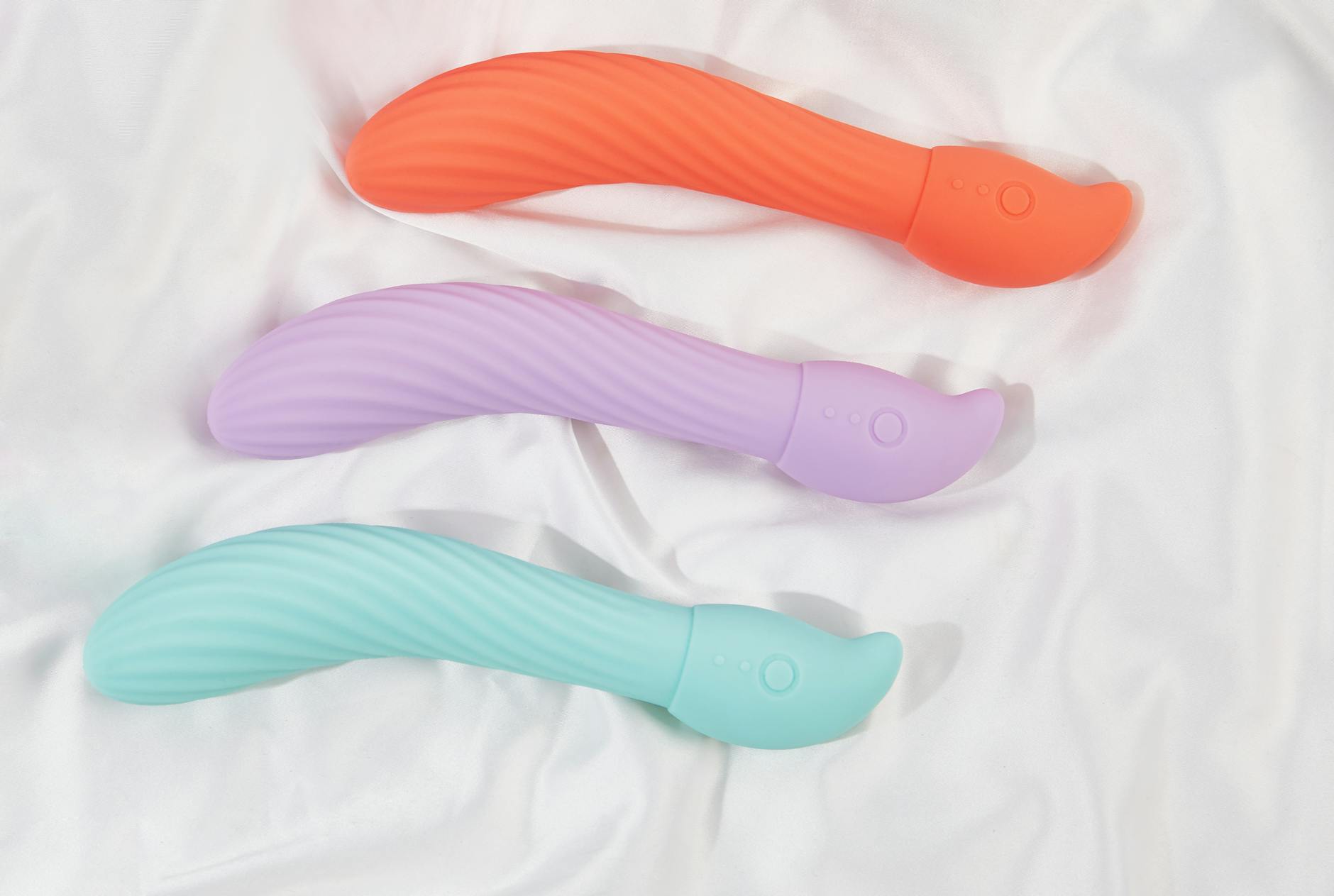
Most people buy a lemon vibrator and cycle through the settings once, then pick a favorite and never think about it again. Which is totally fair. But here's the thing: the speed you want depends entirely on what you're trying to feel right now. Same toy, different goal, completely different setting. Understanding this is the difference between a vibrator that's just okay and one that feels like it was made specifically for your body.
I work with couples and individuals constantly who realize mid-session that they're using the wrong speed for what they actually want. Then they shift settings, and suddenly everything clicks. It's a small adjustment with outsized impact.
Most air-suction toys like lemon vibrators operate on a spectrum from pattern 1 (gentlest, slowest) through 7 or 10 depending on the model. These aren't arbitrary numbers. Lower speeds are gentler on nerve endings and work well for sensitive tissue or when you want sustained arousal. Higher speeds are more intense, faster to climax, better for directed stimulation when you know exactly what you're after.
But speed and intensity aren't the same thing. A slow, consistent pattern can feel incredibly intense if it's the right rhythm for your body. A fast pattern can feel almost ticklish if your tissue is too thin or if you're not warmed up yet.
The suction action itself is what makes lemon vibrators different from traditional vibrators. The air pulse mimics the sensation of oral contact in a way that direct vibration doesn't. Speed adjusts how quick those pulses happen, which changes how your clitoris and surrounding tissue respond.
Sometimes you have time and you want to use it. Patterns 1 through 3 on a lemon clitoral vibrator are built for this. You're not rushing. You're building sensation gradually, letting arousal layer on top of itself. This is the setting I recommend when you have 20-30 minutes and you want to feel everything.
Start at pattern 1. Place the toy gently over your clitoris, not pressed hard. Let yourself feel the shape of the sensation. It should feel like pressure with a soft pulse, nothing jarring. Spend two to three minutes here, even if your instinct is to move faster. Your tissue needs time to recognize what's happening.
After a few minutes, you can move the toy slightly or adjust angle. Notice what changes the feeling. Slightly higher, slightly lower, directly over the hood versus to one side. This exploration phase is where you learn your body's specific map. Most people skip this because they think they already know what feels good. But every session is different depending on your hormones, hydration, arousal level, and what else is happening in your life.
After 5-10 minutes at pattern 1 or 2, you might naturally feel ready to increase. Try pattern 3 or 4. The sensation should feel like it's building on what came before, not a sudden jump. If it does feel jarring, drop back down. There's no prize for using higher settings.
Other times you know what you want and you want it now. This is patterns 5 through 7 or higher. These are your focused-goal settings. You're not exploring. You're not layering sensation. You're applying directed intensity to get to climax, which is a completely valid goal.
You'll notice you want to apply more direct pressure with higher speeds. The toy itself does more work, so you don't have to. Place it where you know it works and keep it there. The pulses are faster, so your nervous system picks up the signal more quickly. Most people reach climax within 3-10 minutes at these settings.
Many of my clients find they use high speeds when they're solo and have limited time, or when they're with a partner and want to build intensity quickly before moving to partnered activity. There's nothing wrong with this approach. Knowing what you want and going for it is a form of good communication with your own body.
Patterns 3 through 5 are the negotiation zone. You're not building slowly and you're not going for the finish line. You're somewhere in between. This is where most people live most of the time. You have a reasonable amount of time. You want to feel good. You want to get to climax, but you're not in a rush.
I find that many people use these speeds without thinking about them. They just feel right because they're the middle ground. But you can use them strategically too. If you're with a partner and you want to stay aroused but not climax yet, a medium speed keeps you engaged without pushing you over the edge. If you're solo and you want the session to last longer, patterns 3 and 4 give you time to explore while still building steadily.
The other use for middle speeds is sensitivity testing. If you're rebuilding sensitivity after taking a break from lemon vibrators, you want to start low and gradually increase. The middle range is where most people can safely expand their range without overwhelming their nervous system.
Here's what most people don't realize: you don't have to stay at one speed. Some of the best sessions involve starting low, building through the middle range, then ramping up. This mimics how natural arousal works. Slow then faster then even faster.
The transition matters. You want to increase the setting when the sensation plateaus, not before. That means you're at pattern 3, feeling good, and then after a few minutes the feeling becomes familiar. That's your cue to try pattern 4. You'll notice a small jump in intensity, but because you've already been stimulated, it doesn't feel shocking.
Some lemon vibrator users find they like a specific speed for reaching climax but a slower speed to recover in. After orgasm, going back down to pattern 1 or 2 gives you the sensation without being overstimulating. This matters if you're sensitive to overstimulation or if you want the pleasure to last a bit longer.
When you're using a lemon clitoral vibrator with a partner, the speed question becomes about communication. What feels good to you might not be what feels good to them to watch or to participate in. This is worth a conversation.
Some people like their partners to start at a high setting and keep it there. Some like a slower speed for longer sessions. Some want to be part of choosing the speed, and some want to hand over control completely. None of these is correct. But having the conversation means you're not guessing during the moment.
If you're introducing a lemon vibrator to a new partner, starting with a lower speed gives you both time to adjust to what's happening. It's less intense. It's easier to slow down or change direction. And it gives your partner a chance to see how you respond, which is often more interesting to watch than jumping straight to climax.
Tissue hydration is the biggest variable. If you're dehydrated or if your natural lubrication is lower, high speeds will feel different than when you're well hydrated. The sensation might feel sharper or less comfortable. This is why adding water-based lubricant actually changes how speed feels. It's not just about comfort. It's about how the toy interacts with your tissue.
Hormones matter too. Your sensitivity varies throughout your cycle, especially if you menstruate. The speed that felt perfect last week might feel too intense this week. This is worth tracking if you use lemon vibrators regularly. Many people find they prefer lower speeds around ovulation and higher speeds during other times.
Arousal level is its own variable. If you're not fully warmed up yet, even pattern 1 might feel too intense. Spend time touching yourself without the toy first. Notice when you feel the shift from neutral to interested to aroused. That's when you introduce the lemon vibrator.
There's no hierarchy of better or worse speeds. Using pattern 1 exclusively is not "settling." Using pattern 7 exclusively is not "too intense." What matters is what works for your body and what serves your pleasure goal in that moment.
I've worked with clients who were convinced they should be using higher speeds because that's what they read online. Then we spent time exploring lower speeds and they realized the slower settings actually felt better. The relief in that realization is real. You get to choose. Your pleasure is the only metric that matters.
If you're new to lemon vibrators and nervous about sensitivity, start low and increase as you learn your body. If you're experienced and know you love intensity, skip the slow build. If you experience clitoral sensitivity changes due to hormones or medication, be curious about how the settings feel different at different times. Your body will tell you what it needs.
Start at pattern 1 or 2. The best speed is the one that lets you feel what a lemon clitoral vibrator actually does without overwhelming your nervous system. You can always increase. You can't un-feel an unexpected intensity jolt. Spend at least 5-10 minutes at your starting speed before deciding to increase. Your body needs time to acclimate.
Regular use of high speeds doesn't damage tissue. But it can shift your sensitivity if you exclusively use the highest settings for weeks or months. If you notice that high speeds stop feeling as intense, try taking a break or mixing in lower speeds for a while. Your sensitivity will recalibrate. This is reversible. It's not harm. It's just your nervous system adapting to consistent input.
There's no rule. Some people use lower speeds solo because they want the session to last. Some use high speeds solo because they have limited time. With a partner, some people want high intensity to climax quickly, and some want low intensity for longer shared pleasure. The speed serves your current goal, not a general category of use.
You might not be positioned correctly, or you might not be fully aroused yet. The difference between settings is more noticeable when your clitoris is engaged. Spend more time warming up first. Make sure the toy is placed where you can feel the sensation clearly. If you've been using high speeds exclusively for months, lower speeds might feel subtle by comparison. Try the lower settings fresh, after a break from the toy.
Your body's pleasure response is adaptive. If you've trained it to respond to high-intensity input, lower speeds will feel less impactful. But this isn't a trap. You can retrain your sensitivity by using lower speeds intentionally for a few weeks. Take a week off if you want to reset. Or accept that you prefer higher intensity and use that. Your pleasure style is not a problem to fix.
Increase when the sensation plateaus. You're at a pattern, you feel good, but the feeling isn't building anymore. You're familiar with it. That's your signal to try the next level. But if you're still building arousal and the sensation is intensifying, stay where you are. There's no time limit. Let the arousal build on its own timeline.
Lemon vibrators give you control in a way traditional vibrators don't. You're not locked into one intensity. You can build slowly, shift speeds mid-session, focus on sensation exploration, or go straight for the goal. The speed you choose is information about what you want and what your body needs right now. Pay attention to that. Use it. Your pleasure is the point.