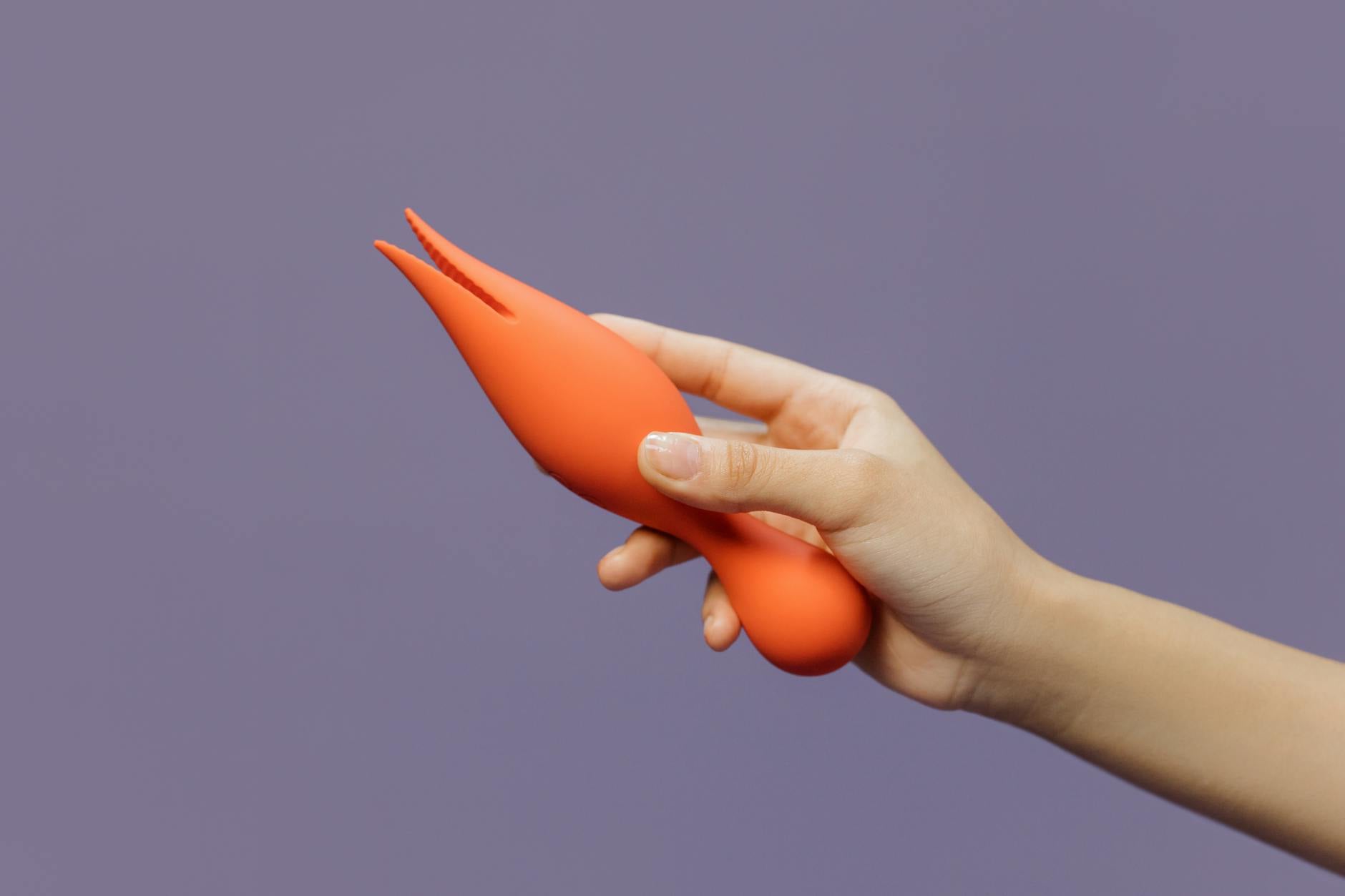
Let's talk about rebuilding pleasure after trauma
If you've survived sexual trauma or abuse, the idea of touch in your body can feel like a betrayal. Your nervous system learned to protect you by shutting down sensation, tensing up at unexpected contact, or disconnecting entirely during moments that should feel good. That's not a flaw in you. It's your body doing exactly what it was designed to do.
But here's what I've seen working with clients for years: when the safety returns, pleasure can too. And often, the first safe place to practice that is alone, at your own pace, with a tool you control completely.
That's where lemon vibrators come in. They're not a magic fix, but they can be a bridge back to your body.
Why trauma survivors need a different approach to pleasure
After abuse or assault, the usual advice about touch feels hollow. "Just relax" doesn't work when your nervous system has learned that touch = danger. Kegel exercises, extended foreplay routines, partner-focused techniques. These all require a level of trust in your body that you might not have yet.
Lemon clitoral vibrators are different because they flip the consent equation. You choose when. You choose how much pressure. You choose the pattern. You choose to stop, instantly, without negotiating with another person's needs or feelings. That control is not a minor detail. It's the entire foundation of healing.
Most trauma survivors report that traditional vibrators feel too intense, too invasive, or too close to the sensation of unwanted touch. The lemon sucker design uses air-pulse technology instead of direct vibration. It stimulates the clitoris without aggressive friction. For many survivors, that gentler approach feels less triggering and more exploratory.
The nervous system piece that most articles skip
Your trauma response lives in your vagus nerve, your amygdala, and your somatic nervous system. Reading about pleasure won't reach those places. Touch might, but it has to be touch you authorize.
When you use a lemon vibrator solo, you're doing something neurologically important: you're teaching your nervous system that touch can be safe, predictable, and under your control. You're creating new neural pathways that compete with the old trauma ones. Neuroscientists call this "bottom up" nervous system regulation. Your body learns safety through experience, not through talking about it.
This doesn't happen in one session. But consistent, self-directed, consent-centered exploration with a tool designed for comfort can genuinely shift how your nervous system responds to sensation over weeks and months.
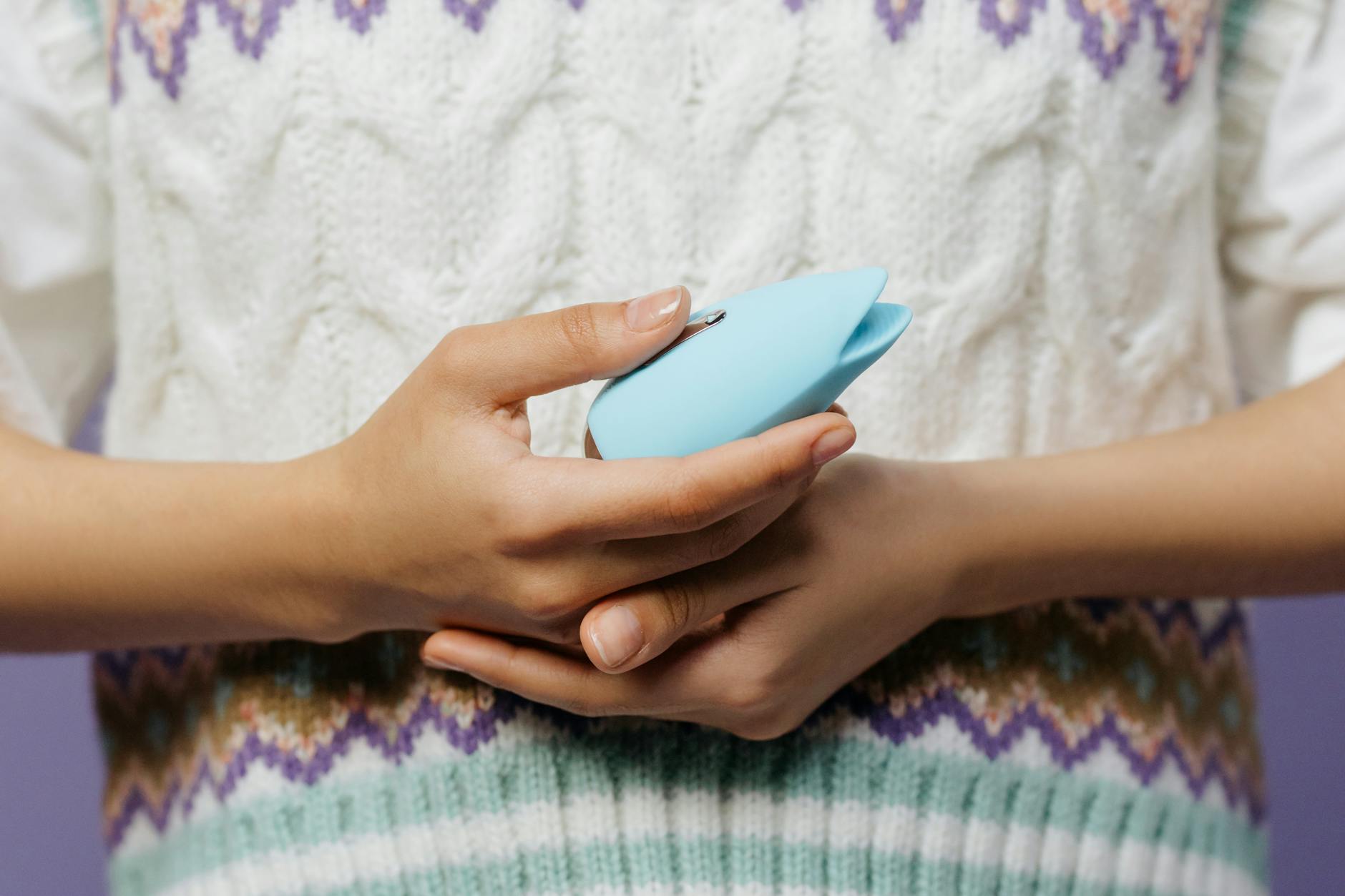
Photo by cottonbro studio on Pexels
Starting small and staying with your own pace
If you're new to this after trauma, approach it like you would any exposure therapy. Start in a space where you feel physically safe. Grounding techniques help: keep your feet on the floor, name five things you can see, have a blanket nearby.
Begin without the lemon vibrator at all. Some survivors need weeks or months of just touching their own legs, belly, or chest before moving toward the clitoris. That's not wasted time. That's essential.
When you do try a lemon clitoral vibrator, start with the lowest setting. Many survivors find that the gentlest pattern feels less like an intrusion and more like exploration. You might use it for thirty seconds. You might stop because something feels weird, and that's completely okay. Each session is data about what your nervous system needs.
The difference between pressure and control
Here's something crucial that I stress with every survivor I work with: arousal isn't the goal. Control is.
When you learn that you can start using a lemon vibrator and stop using it whenever you want, with no one else involved and no one's feelings to manage, something shifts. It's not that orgasms become the target. It's that you prove to yourself, over and over, that your body belongs to you.
Some clients never orgasm. Some take months. Some find that pleasure returns in unexpected ways. The variability is normal. The point is the agency.
Many trauma survivors also find that exploring lemon vibrators when you have difficulty reaching orgasm is less about forcing a climax and more about rebuilding the trust pathway between your brain and your body. That work translates to everything else in your life.
When to involve a partner (and how to protect yourself)
Eventually, if you want to reintroduce partnered sex, a lemon vibrator can help with that transition too. But timing matters enormously.
You should feel comfortable using one solo first. You should be able to reach some version of pleasure or calm without a partner present. Your partner should understand trauma responses (which means they've done their own reading, ideally with a trauma-informed sex therapist). And crucially, your partner should see the vibrator as a tool for your nervous system regulation, not as something that means they've failed.
Some trauma survivors find that introducing lemon vibrators to a curious partner is actually easier than they expect, because it makes the conversation concrete. "This helps my nervous system feel safe" is clearer than abstract emotional language.
What therapy adds (and what the vibrator doesn't replace)
I want to be direct here: a lemon vibrator is not therapy. It's not a substitute for working with a trauma-informed therapist, ideally one trained in somatic experiencing or EMDR.
What the vibrator does is give you a practice space between therapy sessions. It's a way to experiment with sensation and control in isolation, which makes the nervous system work easier. When you show up to your therapist and say, "I managed to use this for five minutes without dissociating," that's data that can inform your treatment.
Therapy processes the trauma story. The vibrator practices the nervous system's new response to touch. Both matter. Neither is sufficient alone.
The reclamation piece that takes time
Pleasure, after trauma, isn't about becoming orgasmic or "getting your sexuality back." It's about reclaiming your body as yours.
Some survivors find that reclamation through solo exploration with a lemon vibrator feels like the first time they've had a genuine choice about what happens to their body. Not coerced, not negotiated, not touched to please someone else. Just theirs.
That shift. From "my body is something that happens to me" to "my body is something I direct." That's the real transformation. The pleasure is a side effect.
FAQ: Healing and rebuilding
Can I use a lemon vibrator if I'm not sure what my trauma response is yet?
Yes, but go slow. Many trauma survivors discover their responses through gentle exploration, not through intellectual understanding first. If you feel a jolt of fear or dissociation, pause. That's your nervous system telling you something. Note it, don't push through it, and consider bringing it to a therapist.
Does using a lemon vibrator mean I'm ready for partnered sex?
Not necessarily. Solo pleasure and partnered pleasure activate different nervous system states. You might feel completely safe and in control alone, and still need more time before partnered touch feels okay. That's normal and doesn't mean you're not healing.
What if I feel guilt or shame using a vibrator after trauma?
That's common. Trauma often comes with messages that your body is dirty, broken, or shameful. Using a vibrator on purpose, for your own pleasure, contradicts that message directly. The guilt usually softens over time as your nervous system learns that self-directed pleasure is safe.
Should I tell my therapist I'm using a lemon vibrator?
If they're trauma-informed, yes. It's data. If they respond with judgment, that's a sign you might need a different therapist. A good trauma therapist understands that rebuilding nervous system safety sometimes happens through solo exploration tools.
Can I use a lemon vibrator if I also have vaginismus or pelvic pain?
Carefully, and ideally with guidance. Lemon vibrators for people with vaginismus or pelvic pain require a gentler approach, starting with external stimulation only. Pelvic floor dysfunction and trauma often go together, and addressing both usually requires both a pelvic floor specialist and a trauma therapist.
What if I've been using a lemon vibrator alone and now want to explore partnered sex again?
Start by using it with your partner present, but under your control. Then gradually shift to partner-applied stimulation, only when and if you feel ready. The vibrator becomes a bridge, not a replacement for rebuilding partnered touch.
The permission you might need to hear
Your body is allowed to feel good. Not because you've "earned it" or "done the work" perfectly, but because you're alive and you deserve to inhabit your own nervous system without fear.
Pleasure after trauma looks different for everyone. For some people, it's an orgasm. For others, it's five minutes without dissociating. For others, it's the simple fact of choosing to touch yourself because you want to, not because anyone is expecting it.
A lemon vibrator can't give you back what was taken. But it can be a tool for proving to yourself, again and again, that your body is yours. That control is possible. That pleasure, even small and tentative, is your birthright.
If you're navigating this path and feeling stuck, reach out. Sometimes talking to someone trained in both pleasure and trauma can shift what feels possible.