
Let's name what's actually happening
Your partner didn't say no. That's the good news. But they also didn't say yes with confidence. They said something closer to "I don't know" or "Maybe" or "I've never tried that" or the classic "Are you sure you want to?" which is code for "I'm nervous."
The gap between curious and confident is where most couples get stuck. And it's exactly where the weirdness happens.
Here's what I've learned after years of coaching couples through this: the problem isn't the lemon vibrator itself. It's the conversation architecture. Get that right, and everything else unfolds naturally.
Why partners get nervous (and it's not what you think)
Most people assume hesitation means "I don't like the idea." It usually means something closer to "I don't want to disappoint you" or "What if this means you're not satisfied" or "Will this change how you see me."
Those are vulnerability fears, not pleasure fears.
If your partner is curious but cautious, they're probably cycling through one of these three loops. Knowing which one you're dealing with changes everything.
Loop one: performance anxiety. They think a toy means they're not enough. It doesn't. But if you skip over this and jump straight to "let's try it," they'll feel it silently the whole time.
Loop two: identity concerns. They think wanting to use toys means something about their sexuality or desires. Sometimes it does, sometimes it doesn't. But the ambiguity is paralyzing.
Loop three: pace and control. They want to explore it, but only when they're ready. Pressure backfires instantly.
The conversation isn't about convincing them. It's about creating enough safety that curiosity can lead.
The setup conversation (do this first, in neutral territory)
Don't launch this in the bedroom. Don't do it after sex. Don't do it when either of you is tired or stressed. This is a regular conversation.
Start by naming what you've noticed without demand. "I've noticed you seemed open when toys came up the other day. I'm curious what that's about for you." Then stop and listen. Don't explain. Don't sell. Just hear.
If they open up, ask clarifying questions. "What appeals to you about it?" "What makes you hesitant?" "Is there something specific that worries you?"
If they clam up, that's useful information too. "No pressure to talk about it now. But I want you to know it's something I'd like to explore together, and I care what you think." Then drop it. For real. Don't circle back for three days.
The information phase (separate curiosity from pressure)
If your partner is in the curious-but-nervous zone, they probably have questions but are scared to ask them.
Some of that you can answer together. Some of it they might need to research alone. That's actually healthy. Lemon clitoral vibrators work in a specific way (air-pulsing technology, not vibration), and understanding that can ease a lot of anxiety. Knowing how a tool works makes it less mysterious.
Point them toward something educational without making it feel like homework. "I found this article about how they're different from what I thought. Want to read it?" Or "I was curious too. I looked up some reviews on Hello Nancy." Shared curiosity is less charged than "I want you to understand."
The timing conversation (this is actually crucial)
Before you even think about using a lemon vibrator together, get aligned on when. Not just "this weekend." Actual conversations about what "ready" feels like for each of you.
For some people, it's "I want to try it the moment I feel like it." For others, it's "I need to think about it for a week." For plenty, it's "I'd rather start alone to see how I feel about it."
That last option is fine. It's actually smart. Using something alone first removes the performance pressure entirely. They get to experience it without an audience. Without having to perform pleasure or handle their partner's reactions. It's just them and a lemon clitoral vibrator.
If that's what they need, support it. "Take your time. No rush. I'm here whenever you're ready." That's the whole conversation.
The actual first time (expectations matter)
When you do use it together, most couples get in their own way because they expect an immediate transformation.
You won't orgasm harder. It won't fix a disconnection. It won't suddenly make desire show up if it's not there. What lemon vibrators do is create a different kind of stimulation that feels novel, which can sometimes unlock things. Sometimes.
The first time is about curiosity, not results. That's a huge difference. If you go in looking for earth-shattering pleasure, a normal experience feels like failure.
Go in saying "I'm curious what this feels like for you" and actually mean it. Then notice things. Does your partner tense up or relax? Do they laugh? Do they seem self-conscious or present? You're gathering information, not judging performance.
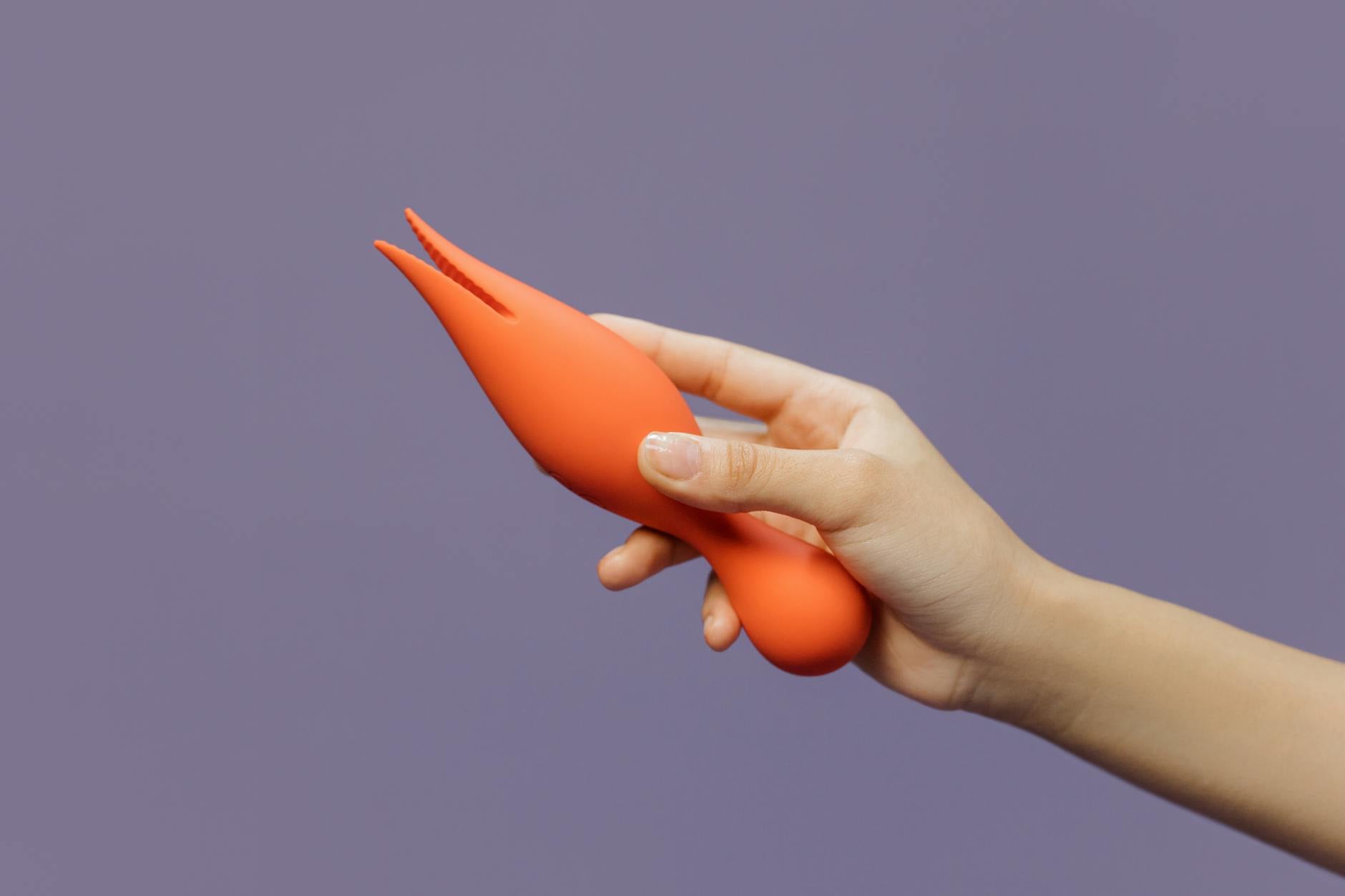
Photo by cottonbro studio on Pexels
The conversation after (this is where most couples fail)
Don't ask "How was that?" like you're reviewing a restaurant. That puts them on the spot.
Instead, share something you noticed without demand. "I loved watching you explore that." Or "You seemed more relaxed than I expected." Or just "Thank you for being open to trying it."
If they want to talk about it, they will. If they want to sit with it, let them. Sometimes people need a few days to process something new.
If it didn't go well. If they felt self-conscious or uncomfortable. If the toy didn't work for them at all. That's also not failure. That's data. "Hey, I sensed you were uncomfortable. Can we talk about what didn't feel right?" Most partners will appreciate the space to be honest.
What to do if they're interested but still really hesitant
Sometimes curiosity and nervousness don't resolve quickly. And that's when couples either force it or abandon it.
Here's a middle path: use the lemon vibrator solo or with them watching. Not performing, not trying to turn them on. Just you exploring it. Some partners relax when they see their partner experiencing pleasure without pressure or self-consciousness. It normalizes it. Makes it less weird.
Other partners need a much longer runway. Months. That's okay. You can mention it occasionally without pushing. "Still thinking about toys?" in a genuinely curious tone, not a nagging one. But mostly you let it sit.
The worst thing you can do is use the fact that they're curious against them later. "Well, you said you wanted to try it." That kills curiosity instantly. If someone said yes out of obligation, they'll never say yes out of genuine interest again.
The long game (after you've started)
Once you've introduced lemon vibrators into your sex life, the anxiety usually settles. Your partner realizes toys don't replace them. Pleasure isn't zero-sum. And after the first time or two, it becomes just another option in your toolkit.
For some couples, it becomes part of regular play. For others, it's an occasional thing. For some, they try it once and never again, and that's completely fine.
The relationship win isn't that you're using toys now. It's that you had a vulnerable conversation, created space for curiosity, and moved at a pace that felt safe for both of you. That infrastructure matters for everything else later.
FAQ on introducing toys to curious partners
What if my partner says yes but then gets cold feet the day of?
Cold feet is normal and doesn't mean they've changed their mind. They might just need reassurance. "We can go slow." "We can stop whenever." "No expectations." Then ask directly: "Do you actually want to do this, or do you need more time?" Honest answer is the only one that works.
Should I buy the toy without them knowing as a surprise?
No. Surprises are for flowers, not intimate gear. It removes consent and choice. If you buy it, you're deciding for them. That's the opposite of the trust you're trying to build. Buy it together, or talk first and let them pick.
What if they're curious but their past trauma makes them hesitant?
This needs more space and possibly professional support. How Lemon Vibrators Work for People With Vaginismus or Pelvic Pain addresses trauma-informed exploration. Consider working with a trauma-informed therapist alongside any exploration at home.
Can we use a lemon vibrator if our sex life is already struggling?
A toy won't fix a struggling sex life. It might create a moment of novelty, but if the underlying disconnection is still there, the toy becomes another thing you're not connecting over. Address the disconnection first. Then introduce toys as part of reconnection, not as a band-aid.
What if my partner is curious but says I should surprise them during sex?
That's a trap. Surprise during sex removes consent in real time. Even if they said they wanted it to be a surprise, the moment it happens, they can't actually consent or say no. Get explicit: "I'm going to use it now, okay?" Simple. Unglamorous. Essential.
How do I know if they're really interested or just going along with me?
You can't know for certain. But you can create conditions for honesty. "If this isn't actually for you, tell me. I'd rather know. I don't want you doing something just because you think I want to." Then watch their behavior. Do they initiate it? Do they bring it up again? Do they seem relaxed or are they performing? Over time, you'll get clarity. Trust that.
The real win
Introducing lemon vibrators to a curious-but-nervous partner isn't about the toy. It's about building the kind of relationship where both of you can say "I want to try something" or "I'm nervous about this" without shame or pressure. That skill makes everything better. Sex, sure. But also conversations about money. About what you actually want in life. About asking for what matters.
Your partner's nervousness isn't a problem to solve. It's information to respect. Honor that, and everything unfolds more naturally than you'd expect.