Let's talk about what menopause actually does to sensation
Menopause doesn't shut pleasure down. But it does dim the volume. Estrogen withdrawal changes how your nerve endings respond to touch, how fast arousal builds, and how intense sensation feels. This isn't permanent numbness. It's a recalibration that requires a different strategy.
Here's what I've seen clinically: people assume reduced sensation means they need more intensity. More vibration speed, more pressure, more everything. Then they get frustrated because standard vibrators feel aggressive or overstimulating on tissue that's thinner and more vulnerable. That's when they abandon the tools entirely. Which is exactly the wrong move.
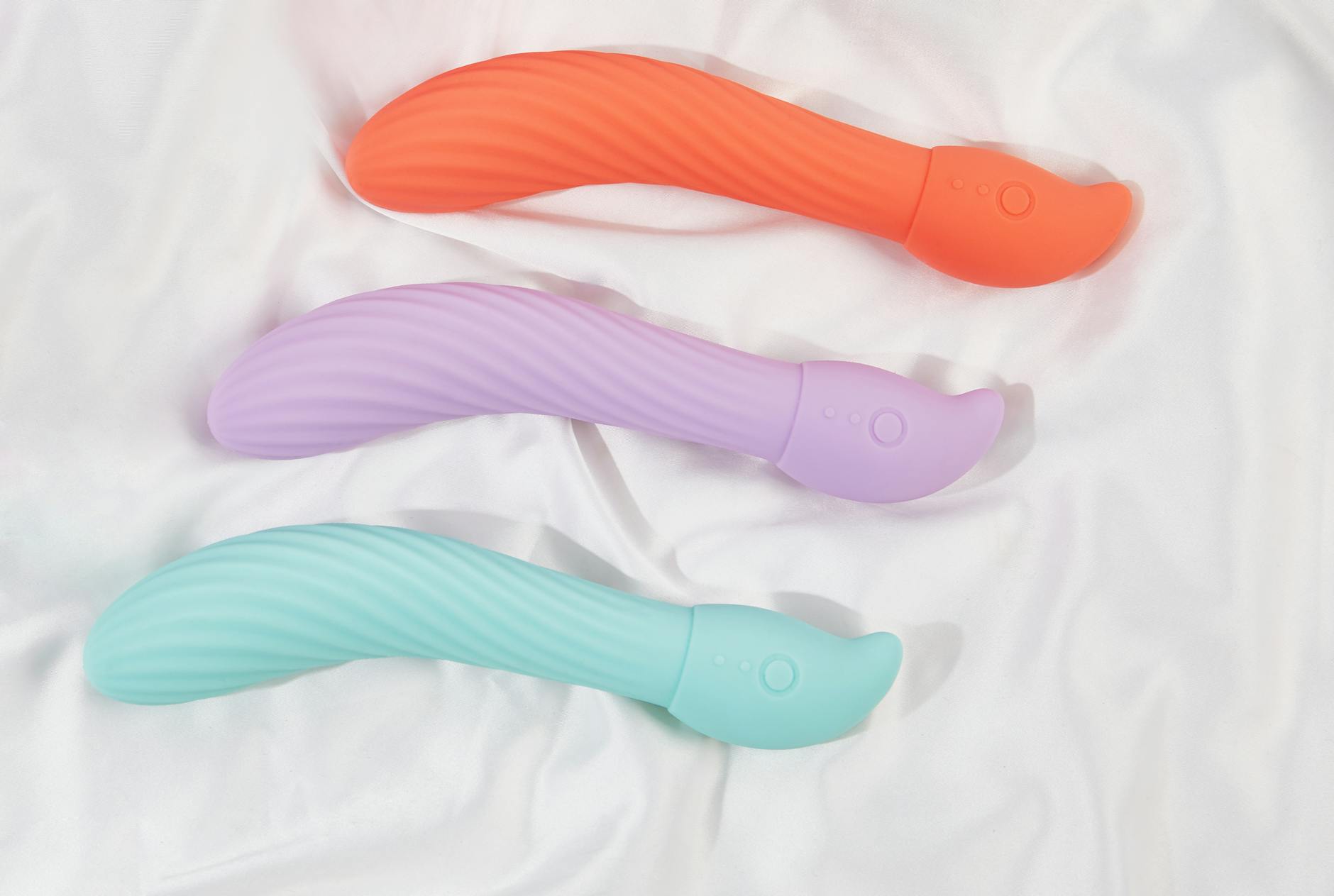
The suction mechanism in lemon clitoral vibrators works differently than traditional vibration. That difference matters when sensation shifts.
Why suction beats pure vibration during hormonal transition
Traditional vibrators rely on oscillating pressure to create sensation. When tissue sensitivity drops, that pressure can feel harsh or numbing. Suction works by creating a gentle vacuum that stimulates the full nerve network of the clitoris without relying on friction or direct contact intensity.
During menopause, your clitoris is still fully innervated. The nerves haven't gone anywhere. What's changed is the surrounding tissue's responsiveness and the speed at which arousal cascades through your nervous system. Suction bypasses that friction problem entirely. It stimulates deeper nerve clusters that remain sensitive even when surface sensation fades.
This is why people often report that lemon vibrators feel more effective post-menopause, not less. You're not fighting against tissue sensitivity. You're working with it.
The three-step warm-up that actually works
Step one: External only, lowest setting. Don't go directly to the clitoris. Spend 3-5 minutes on the surrounding area—the labia, the mons pubis, the inner thighs. The goal is to wake up nerve endings gradually. This mimics the slower arousal trajectory that menopause creates. Don't fight it. Lean into it.
Step two: Introduction with distance. Once you feel warmth building, position the Lem about a quarter-inch away from the clitoris. Don't apply it directly yet. Let your body adjust to the sensation signature. Most people find settings 1-2 feels right here. You're teaching your nervous system that this is different from what it expects.
Step three: Direct application, gradual intensification. After 2-3 minutes of step two, move to direct contact. Stay on setting 2-3 for at least 5 minutes. Your goal is not orgasm yet. Your goal is sustained pleasure and signal strengthening. Only increase intensity after you feel arousal deepening naturally.
This sequence takes 12-18 minutes. That sounds long if you're used to quicker arousal. But it's not a bug. It's the actual timeline your body is asking for now.
What changes about orgasm quality and frequency
You may notice orgasms feel different. They might be more localized, less full-body, or require a longer buildup. Some people find that clitoral orgasms become sharper and more distinct during menopause, not duller. Others report needing a longer recovery between sessions. Both are normal.
Frequency can shift too. If you masturbated two or three times a week before, you might find that once weekly feels more aligned with your body's capacity now. That's not a loss. That's alignment. Quality over quantity always wins.
One thing that doesn't change: the orgasmic nerve pathways themselves are unchanged. You can still orgasm, often intensely. You're just accessing them on your body's new timeline.
Lubrication and sensation work together
Don't skip lubricant during menopause, even with the Lem. Water-based lube isn't just about comfort. It changes the sensation profile. Without it, suction can feel too sharp or extractive on thinner tissue. With it, the sensation becomes smoother and more gradual.
Apply lube generously to the area before you start. Reapply midway if you're doing longer sessions. Your clitoris should feel slick, not sticky. The lube should feel like part of your body's natural response, not like you're applying lotion.
Temperature matters too. Some people find that warm lube feels more pleasurable than cold. Keep the bottle on your nightstand rather than in a bathroom cabinet. Small detail, huge difference.
When sensation stays flat and what to try
If you're following the three-step sequence and sensation still feels muted after two weeks, a few things might be happening. First, check your hydration and sleep. Both plummet after menopause and both directly affect nerve responsiveness. This sounds obvious until you realize you've been running a sleep deficit for six months.
Second, consider whether stress or relationship tension is in the room with you. Reduced sensation sometimes masks emotional disconnection. If you're having sex while resentful or distracted, no vibrator will fix that. That's a conversation, not a device problem.
Third, talk to your doctor about topical estrogen. Not systemic hormone replacement. A localized vaginal cream or ring can restore tissue thickness in a way that dramatically improves sensation within 4-6 weeks. It's underused and undermarketed, but it's highly effective.
Solo pleasure versus partnered pleasure during this transition
Menopause is an excellent time to separate your solo practice from partnered sex. They have different goals now. Solo sessions are about discovery and recalibration. You're learning your body's new language without performance pressure. Partnered sex carries different expectations and dynamics.
If your partner wants to participate, involve them in the adjustment process. Let them see the three-step warm-up in action. Explain that longer arousal time isn't frustration. It's how your body works now. If they can't metabolize that, that's useful information about your relationship that has nothing to do with menopause.
Manypeople find that once they reclaim their solo pleasure during menopause, partnered sex improves dramatically. Because you're no longer waiting for your partner to provide sensation you can generate yourself. You're arriving to sex already knowing what you need.
Frequency and recovery time
Your body may need more recovery time between sessions during menopause. That's not weakness. That's your nervous system regulating itself around lower hormone availability. If you masturbate three days in a row and feel depleted, your body is communicating. Listen to it.
Many of my clients find that every other day feels right, or twice weekly. Some shift to once weekly and find it more satisfying because they have more anticipation between sessions. There's no correct frequency. There's only what your body is telling you.
If sensation continues declining over months without apparent reason, that's worth mentioning to a healthcare provider. Menopause affects sensation, but other conditions do too. You want to know whether you're dealing with normal hormonal shifts or something that needs different attention.
The mental shift that makes everything easier
The biggest barrier I see is people treating menopause as a loss of capability. "I used to feel everything immediately. Now it takes forever." That framing creates tension that actually dampens sensation further. Your nervous system picks up on the resistance.
Reframe it: your body is asking you to slow down. To pay attention differently. To discover new pathways to pleasure that don't rely on friction and urgency. That's not diminishment. That's evolution.
Pleasure during menopause is often richer than pleasure before it, precisely because you've stopped performing and started exploring. You know yourself better. You have fewer cultural expectations pressing down. You're more likely to use tools like lemon clitoral vibrators in service of genuine sensation rather than checking a box.
That shift alone changes everything.
People Also Ask
Why does my lemon vibrator feel less intense than it used to after menopause?
Sensation sensitivity drops as estrogen withdraws, affecting how quickly your nerve endings respond to stimulation. This isn't a device problem. Traditional vibrators often feel too sharp during this phase because they rely on friction pressure. Lemon vibrators use suction, which stimulates deeper nerve networks that remain responsive. The perceived intensity drop is usually a mismatch between your old arousal timeline and your new one. Extending warm-up time and starting on lower settings reveals that sensation is still there—it's just asking for a different approach.
Can I use my Lem vibrator during menopause, or will it damage thinner tissue?
Yes, absolutely. The suction mechanism in lemon clitoral vibrators is actually gentler on delicate tissue than traditional vibrators because it doesn't rely on direct friction. Pair it with water-based lubricant, start on lower settings, and extend your warm-up time. The Lem's design actually shines during menopause because it works with tissue sensitivity rather than against it. Thousands of menopause-age people use them safely and effectively when technique and lubrication are in place.
How long should I plan for a session with a lemon vibrator during menopause?
Budget 12-20 minutes. The three-step warm-up (external only, introduction with distance, direct application) takes about 15 minutes of the session. Rushing this defeats the point. Your body is on a slower arousal timeline now, and trying to compress that timeline creates frustration and reduces pleasure. Many people find that slower sessions actually feel more satisfying because they allow deeper nerve activation and more sustained arousal before orgasm.
Does topical estrogen make lemon vibrators feel more effective?
Often yes. Topical vaginal estrogen creams restore tissue thickness and improve local blood flow, which enhances sensation sensitivity. Some people notice improvement in vibrator effectiveness within 2-3 weeks of starting topical estrogen. That said, lemon clitoral vibrators work well during menopause even without additional treatment. Topical estrogen is worth exploring if sensation remains flat after you've adjusted your technique, but it's not a requirement for pleasure.
My partner wants to help, but I feel self-conscious about needing more time and lubrication now. What do I say?
You're navigating a normal life transition, and your body is communicating what it needs. A partner worth keeping will see that as information, not criticism. You might say something like: "My body's arousal timeline has shifted, and it actually feels better when we slow down. I want to show you what works for me now." If your partner can't adapt to that, that's a relationship issue separate from menopause. This is an opportunity to reclaim what you want, not to apologize for your body's legitimate changes.
Can I use a lemon clitoral vibrator if I'm on hormone replacement therapy?
Yes. HRT and local clitoral vibrators work in different systems. HRT affects systemic hormone levels. A vibrator is a mechanical tool. Some people on HRT find sensation returns quickly. Others still benefit from the slower warm-up sequence because systemic hormone replacement doesn't always restore local tissue thickness immediately. Listen to your body and adjust timing accordingly, but there's no contraindication.
What happens next
Menopause is not a deadline for pleasure. It's a redirect. Your body is asking you to slow down, pay attention, and discover what works now instead of forcing what worked then. Lemon vibrators excel in this phase precisely because suction doesn't rely on friction intensity. That feature that seems niche becomes your advantage.
Start with the three-step warm-up. Give it two weeks. Track what shifts. Most people find that within a month, sessions feel more pleasurable and less frustrating than they expected. Your body hasn't abandoned sensation. It's reorganized it.
If you're struggling with this transition alongside relationship challenges or persistent mood changes, talking to someone trained in midlife dynamics helps. Pleasure and relationship context are intertwined. Sometimes the vibrator is the fix. Sometimes the vibrator is the tool that reveals what else needs attention.
Your pleasure matters at every age. Menopause is not the exception to that rule. It's the chapter where you finally get to define what pleasure means, free from the pressure of decades past. That's not a loss. That's a beginning.
If you'd like to explore how to navigate intimacy changes during major life transitions, reach out. We can talk through what's realistic for your situation.