
Let's name what's really happening here
One of you wants to try lemon vibrators or other clitoral vibrators together. The other has shut it down, made it weird, or pretended they didn't hear you. This isn't about sex toys. It's about what the toy represents in your partner's mind, and that story is almost always wrong.
When someone resists sex toys in a relationship, they're usually protecting something: their sense of being enough, their role as the primary source of pleasure, their identity as a "good" partner, or an old shame they haven't named. Understanding which one is the actual problem changes everything.
What resistance usually masks
I've worked with couples through this exact conversation hundreds of times. Here are the stories I hear most often.
"If you need a toy, I'm not satisfying you." This is the most common one. Your partner hears "lemon vibrator" and translates it to "you're inadequate." The math feels simple: toy enters the picture, I'm replaced. They don't understand that toys amplify sensation, not your desire for them. They think pleasure is a pie that gets smaller when sliced.
"This feels like cheating." Some people have internalized the idea that any pleasure source outside the partnership is a betrayal. They grew up with the message that your partner should be your everything, and introducing a clitoral vibrator feels like inviting someone else into the bed.
"I don't want to think about you with that when we're apart." This is anxiety disguised as prudishness. They're picturing you using a lem vibrator solo and feeling excluded, worried, or less important in your pleasure.
"I'm embarrassed to use toys." Less common but real. Your partner might feel silly, awkward, or worried they'll do it wrong. Toys feel clinical or performative. They'd rather stick with what feels natural, even if natural isn't working as well anymore.
"This is a sign you want things I can't give you." This one carries real weight. Maybe you're asking for something your partner feels genuinely unsafe doing, or physically uncomfortable with. That's a different conversation and it requires honesty, not forcing the toy issue.
How to actually bring it up (the reset conversation)
If you've already mentioned lemon vibrators and they've shut you down, you're starting from a place of defensiveness on both sides. Reset that first.
Pick a time when you're both calm, fed, rested, and fully clothed. Not in bed. Not during or after sex. Make it clear this isn't a seduction attempt; it's a conversation.
Start with the truth. "I've noticed you shut down when I mention toys. I don't want to keep pushing something that makes you uncomfortable. But I also don't want to drop it without understanding what's actually going on. Can we talk about what worries you?"
Then listen. Actually listen. Not to argue, not to fix, but to hear what story they're telling themselves. You'll often find that the resistance has almost nothing to do with the toy itself.
If they say "I feel like I'm not enough," the response isn't "that's silly." It's "I get why you'd think that. That's not what this is about. You're not being replaced. I just want to feel more sensation." Frame it as an addition, not a substitution.
If they say "I'm embarrassed," normalize it. "Lots of people feel weird about this at first. We can go slow. You don't even have to touch it." Sometimes just knowing there's no performance pressure softens the resistance.
If they say "I'm worried you'll think of this when we're apart," be honest. "Maybe sometimes I will. And I might think about you too. That's how pleasure works. Both things can exist." The fear often dissolves once you acknowledge it directly.
The introduction strategy that actually works
Once you've had the conversation and they've agreed to try, don't go straight to lemon vibrators during sex. That's too much pressure on both of you.
Start by showing them the toy outside the bedroom. Let them hold it, examine it, see that it's just an object. No mystery, no threat. This sounds basic, but it works because a lot of resistance comes from the toy being this abstract scary thing in their mind.
Use it solo first, without them watching or being present. Let them know you're exploring it on your own. This removes the pressure for them to perform and lets you get comfortable with the sensation. When they ask how it feels, be honest but casual about it. "Feels good. Different. Strong sensation." Treat it like you'd talk about a new coffee maker.
The first time you use it together, don't make it the main event. Use a lemon clitoral vibrator or whichever toy you chose during foreplay before anything penetrative. Your partner can focus on other things. kissing, hands, their own pleasure. The toy isn't replacing their touch; it's running parallel to it.
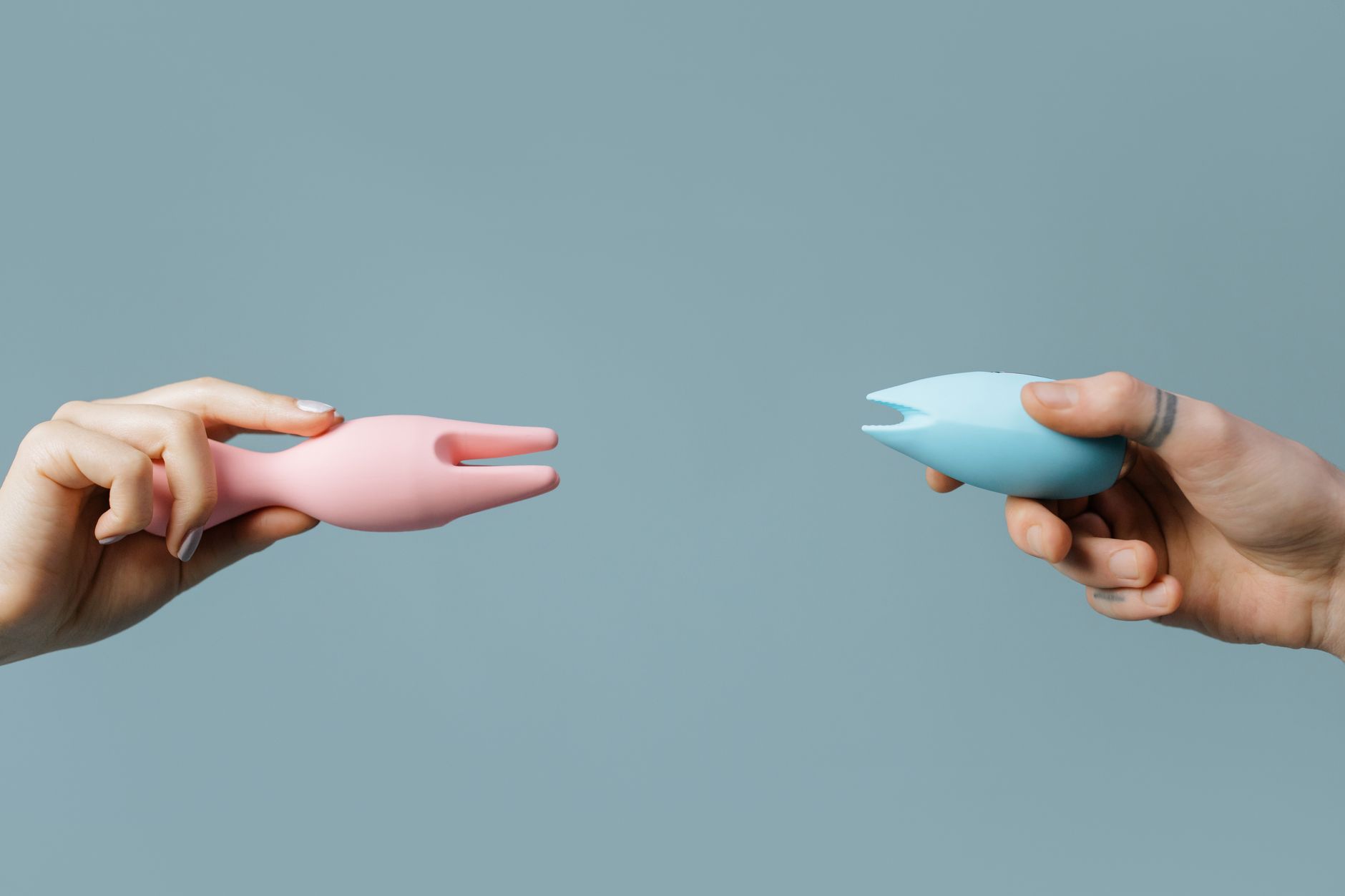
Photo by cottonbro studio on Pexels
Let them touch the vibrator while it's on. This sounds small but it's huge. When they feel the sensation in their hand, when they control it for a moment, when they realize it's not some threat to their role, something shifts. They stop seeing it as competition.
What changes once resistance softens
Once your partner moves from "no" to "okay, we'll try," a different set of dynamics emerge. This is where a lot of couples actually hit their real issue.
Some partners discover they love watching you use lemon vibrators. The anxiety disappears once they see you actually enjoying yourself, and pleasure becomes something you share instead of something you hide. Others find that using clitoral vibrators together opens a conversation about what each of you actually wants, which has been missing for years.
Some people use the toy sometimes and abandon it other times. That's fine. It doesn't have to be a permanent fixture in your sex life. It's an option, not an obligation.
Here's what I see most often: once the shame and defensiveness lift, couples realize the toy wasn't the real problem. The real problem was that they couldn't talk about pleasure without it feeling like judgment. The lem vibrator or lemon clitoral vibrator just became the container for a much bigger conversation about desire, satisfaction, and what each person needs.
When resistance is actually a boundary
This is the hard part, so I'm going to be direct. Sometimes resistance isn't a story that needs unpacking. Sometimes it's a genuine boundary, and you need to respect it.
If your partner says "I don't want toys in our sex life. Full stop," and you've had the conversation, had the reset, and they're still firm on it, you have a choice to make. You can use toys solo and keep that part of your pleasure private. You can accept that this is a difference in what you want from sex. Or you can decide this is a deal-breaker for compatibility.
All three are valid. But pretending they'll come around if you just introduce the toy the right way is relationship arithmetic that doesn't work. Some people genuinely aren't comfortable with toys, and that's okay. What's not okay is either partner resenting the other for that boundary.
What I see go wrong is one partner using toys secretly and the other finding out. That creates real betrayal. If you need lemon vibrators in your pleasure life and your partner won't allow it, that's a difference you need to name and negotiate honestly. Not sneak around.
If the resistance is really about unsolved intimacy problems, how to use lemon vibrators when you feel out of sync with your partner and how to use lemon vibrators for deeper connection when feeling emotionally distant have deeper frameworks for rebuilding that ground first.
The middle path: what consent actually looks like
You don't need your partner's enthusiasm. You need their informed, voluntary agreement. There's a difference.
Informed means they understand what the toy does, how it's used, and why you want to use it. Not vague, not pressured.
Voluntary means they chose it, not because you wore them down, but because they decided they were willing to try.
Consent isn't "yes and they're thrilled." Consent is "yes and they agreed, even if they're still a little nervous." Your partner trying lemon vibrators together because they love you and they want to understand what turns you on is valid consent. Them doing it because you've made them feel guilty for resisting is not.
If you've had the reset conversation and they still won't budge, that's real information. They've told you where their boundary is. The question then becomes: can you live with that, or do you need to have a bigger conversation about compatibility.
FAQ: the questions I hear most
What if my partner says yes but acts resentful during sex?
That's a sign the conversation didn't actually resolve the underlying issue. Resentment during sex is a form of withholding, and it will poison the experience for both of you. Pause, get out of bed, and go back to the talking part. "I notice you seem upset. I don't want to do this if you're uncomfortable." That usually opens the door to what's actually bothering them.
Can I just use a lemon vibrator solo and not tell my partner?
You can, and plenty of people do. But if they find out later, it becomes a trust issue on top of the toy issue. If you're going to use toys, either do it openly or have a conversation about what privacy boundaries each of you needs around solo pleasure. Secrecy almost always comes out and causes more damage than the toy ever would have.
What if we try lemon clitoral vibrators and they like it more than I do?
That's actually great. Pleasure isn't competitive. If they get excited about sensation and toys and want to explore that, you've just opened a door to more intimacy. The goal isn't for you both to feel the same way; it's for you both to be curious about each other's pleasure.
How long before we can use toys comfortably together?
It depends entirely on what's driving the resistance. If it's just unfamiliarity, a few weeks of conversation and casual exposure. If it's tied to deeper shame or identity stuff, months or even years of consistent, patient conversation. Don't rush this. Forcing it will make the resistance worse, not better.
What if the real problem is that we're not attracted to each other anymore?
Then a toy won't fix it. That's a different conversation entirely, probably with a therapist. Lemon vibrators are great for a lot of things, but they can't resurrect attraction that's genuinely gone. They can enhance what's there; they can't create chemistry from nothing.
Is it normal for partners to have really different feelings about toys?
Completely normal. One of you might love them; the other might tolerate them. One might use them solo but not during partnered sex. One might be curious, the other skeptical. All of those are normal variations. The goal is finding a middle path where both of you feel heard, not forcing uniformity.
The deeper truth
When a partner resists sex toys, you're often watching them work through something much bigger than the toy itself. They're negotiating their sense of self, their adequacy, their role in your pleasure, their relationship to sexuality itself.
Your job isn't to convince them the toy is harmless. It's to understand what story they're telling themselves and help them tell a truer one. That happens through patience, listening, and consistent reassurance that your desire for more sensation has nothing to do with the value you place on them.
Sometimes they'll come around. Sometimes they won't, and you'll have to decide what that means for your relationship. But the conversation itself, if you have it with honesty and care, almost always brings you closer. Even if the answer is no.