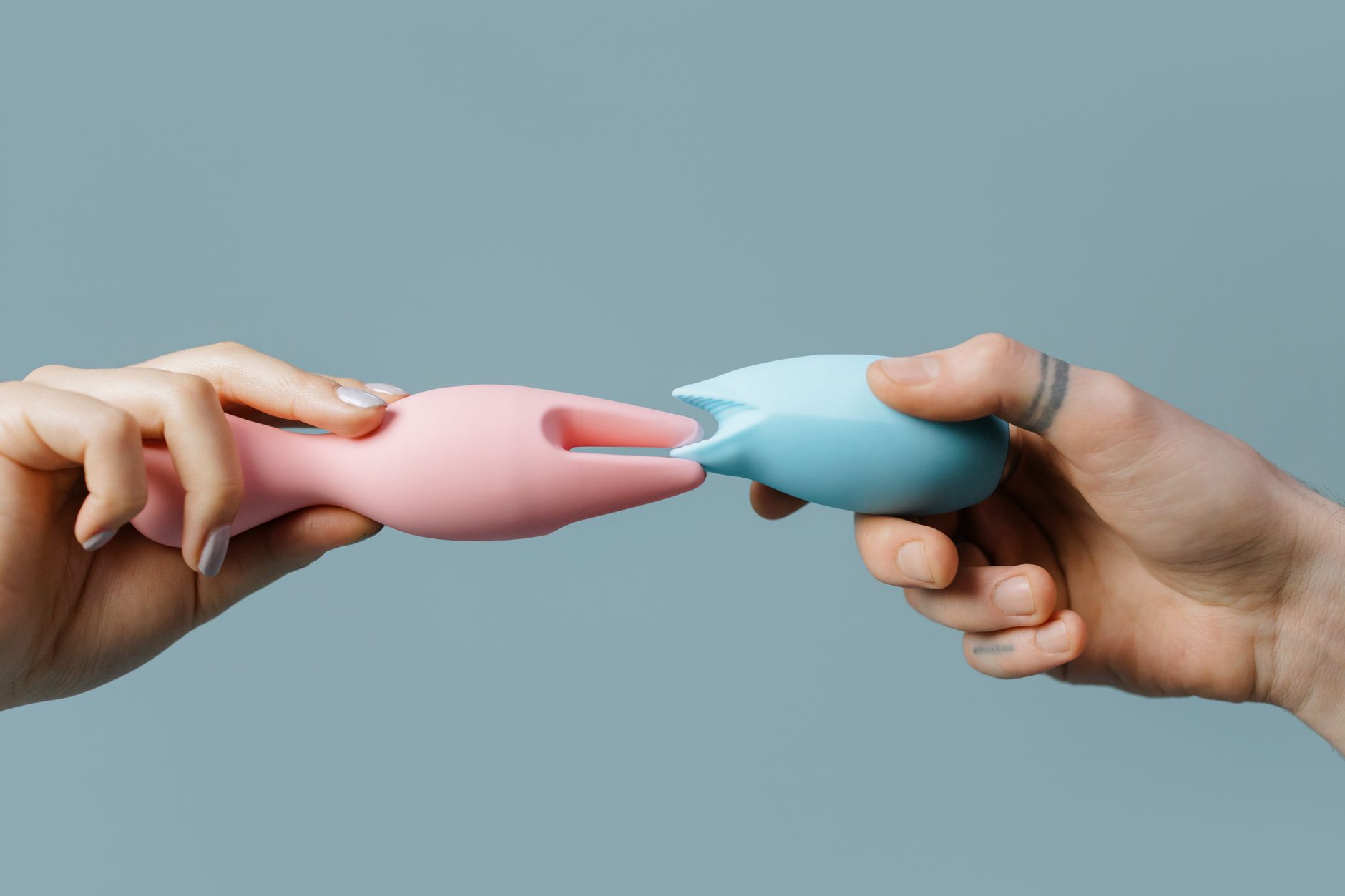
Let's talk about the actual problem here
Your partner says no to toys. Maybe it's anxiety, maybe it's insecurity, maybe they genuinely don't see the point. The thing is, you're interested anyway. And waiting for permission to explore your own body is a setup for resentment, disconnection, and—honestly—wasted years.
Here's what I tell clients: your solo pleasure is not a threat to your partnership. It's a foundation for it.
Why solo play with a lemon vibrator matters right now
When a partner resists toys, couples often get stuck in one of two terrible patterns. Either the interested partner abandons the idea entirely (and quietly resents their partner for it), or they keep pushing until toys become a source of conflict. Both outcomes kill intimacy.
Solo exploration with a lemon clitoral vibrator breaks that deadlock. Here's why it works.
First, you're learning your body without an audience. That removes the performance pressure. Many people have never experienced their own pleasure outside of partnered sex, which means they have no baseline for what actually feels good to them. A lemon vibrator in private gives you that data. It grounds you in your own sensation instead of in a partner's reaction.
Second, when you know what you like, you're not asking your partner to guess or invent it. You're not saying "use more pressure" or "try the left side." You're saying "when I use this pattern, my nervous system settles." That's information, not a request for validation.
Third, and maybe most important: solo pleasure rewires the narrative in both your heads. Instead of "toys feel like a threat" or "my partner wants something I can't give," the story becomes "my partner is exploring and feels more confident." Confidence is attractive. It shifts things.
Getting started solo without secrecy
I'm not telling you to hide. Secrecy creates the real problem in relationships, not vibrators.
Have a clear, low-pressure conversation when you're both calm and clothed. Not during sex, not when one of you is upset. Say something like: "I'm going to explore solo with a vibrator because it helps me understand myself better. I'm not doing this because you're not enough. I'm doing it because I deserve to know my own body."
Then stop talking. Don't defend it. Don't ask for permission. You're informing, not asking.
If your partner gets defensive ("You don't need that with me" or "That means you're not attracted to me"), that's their work to do, not yours to fix. You can say gently: "This is about me, not about you. I need you to trust that."
Most partners who initially resist come around once they see their person is more relaxed, has clearer communication about pleasure, and isn't resentful. Anxiety often softens when the feared thing doesn't blow up the relationship.
Building your solo routine with the lem vibrator
A lemon sucker like the Lem works beautifully for solo exploration because it doesn't require penetration or internal sensation. You can focus entirely on external clitoral stimulation, which is often where people actually struggle to receive pleasure in partnered sex.
Start low. Use pattern 1 or 2 on the Lem. You're not chasing orgasm yet. You're mapping sensation. Spend 10 to 15 minutes just noticing: what pressure feels good? What rhythm? Does your body want speed or steady suction? Does your arousal change as you relax?
Keep a mental note (or actually write it down). "I like patterns 3-4 when I'm warmed up" or "Steady suction on the left side feels different than the right." This is not trivial information. This is the difference between years of disconnected partnered sex and actual pleasure.
Many clients also notice that solo play calms their nervous system. Orgasms release oxytocin. They settle anxiety. If your partner gets resistant or withdrawn during partnered sex, regular solo exploration with your lemon clitoral vibrator often reduces that tension. Sex becomes less fraught when both of you aren't carrying all of that pressure.
When your partner notices the shift
This usually happens without you saying anything. Your partner notices you're more relaxed, more present during partnered sex, less critical of them, less checking-out mentally. They might even notice you initiating sex more often or seeming more into it.
When that happens, you can say casually: "Yeah, I've been taking better care of myself. It's helping." Don't oversell it. Don't make it about the Lem. Make it about the fact that you're taking pleasure seriously.
Some partners will then ask questions. "Can I watch?" "Can I help?" "What did you learn?" Those are good signs. It means their defensiveness is shifting into curiosity. You're not required to say yes to any of those questions. But if you want to, watching together or talking through what turns you on during partnered sex is how the conversation naturally moves forward.
Handling the partner who stays resistant
Some partners don't come around. They stay uncomfortable with toys, or they accept them but stay emotionally distant from that part of your sexuality.
That's actually valuable information too. It tells you something about your partner's ability to support your autonomy. It's not a dealbreaker necessarily. But it's worth examining in a couples context with a therapist who understands both sexuality and attachment.
In the meantime, solo pleasure with a lemon vibrator is still your work to do. Your partner's resistance doesn't get to stop you from knowing yourself. That's the boundary that matters.
Making solo play part of your regular rhythm
Once you've built a routine, treat it like any other self-care. Weekly or twice weekly is normal for most people. Some days it's 20 minutes of focused exploration. Some days it's five minutes before bed because your body needs that settling.
The Lem is easy. It's quiet. It recharges quickly. You can use it during your lunch break or before your partner gets home from work. Accessibility matters because consistency matters.
Over time, solo exploration becomes less about "I have to do this because my partner won't play" and more about "This is just part of knowing myself and feeling good in my body." That shift changes everything in the relationship. You stop seeking permission. You stop checking in for approval. You just know: my pleasure matters, and I'm responsible for it.
The conversation that actually works
Once you've had several weeks of solo play, the next conversation with your partner can be different. Instead of asking them to accept toys, you can describe what you've learned.
"When I use a lemon vibrator solo, I understand that my body prefers steady stimulation over speed. That helps me during partnered sex because I can tell you what I need." Or: "I've noticed that regular solo time makes me feel less anxious and more interested in sex with you."
You're not asking them to join. You're sharing data. Data is harder to resist than requests. It's factual. It doesn't require him to be vulnerable or try something new. It just is.
Many partners who started out resistant eventually get curious because they can see the benefit in their partner's life. Other partners stay resistant, and you get to decide what that means for your relationship. But either way, you've already won because you know yourself better. You're not disconnected from your own pleasure anymore.
Why this actually saves relationships
I've worked with hundreds of couples where toys became a flashpoint. The pattern is almost always the same: one person wanted toys, the other felt threatened, and they reached a stalemate that poisoned everything.
The couples who moved through it successfully did one thing: the interested partner stopped asking for permission and started exploring solo. It took the pressure off the resistant partner. It also made the interested partner less resentful and more confident.
Relationships don't fail because one person uses a vibrator. They fail because partners can't communicate about pleasure, can't trust each other's autonomy, or can't separate "my partner wants this" from "my partner doesn't want me."
Using a lemon clitoral vibrator solo while your partner isn't interested isn't sneaking around. It's self-knowledge. It's self-respect. And oddly, it often ends up building the kind of trust that actually makes partnered exploration possible later.
FAQs
What if my partner finds out I'm using a lemon vibrator without telling them first?
Be honest. Say: "I wanted to understand my own body better, and I wasn't sure how you'd react. I should have told you. I'm telling you now." Then listen without defending. If your partner feels blindsided or betrayed, that's real. Acknowledge it. But don't apologize for exploring your own pleasure. Apologize for the secrecy if that matters to your relationship values.
Can I use a lemon sucker during partnered sex before my partner is ready to accept it?
Yes, if you're honest about it. Some couples find it easier to introduce toys during partnered sex than to have a separate conversation about solo play. You might say: "I want to try something that helps me feel more pleasure during sex with you." Many partners who resist the idea of toys in general are fine with toys during partnered sex because it directly benefits both of you.
If I use a lemon vibrator solo regularly, will I need it during partnered sex too?
Not necessarily. Some people do. Some people don't. The point of solo exploration is learning what your body responds to, not becoming dependent on a particular sensation. Many clients find that once they know what feels good, they can communicate that to their partner, who might replicate it without a toy.
How do I talk to my partner about what I learned from using a lem vibrator without making them feel bad?
Use "I" statements. "I learned that I respond well to steady pressure" sounds different than "You never do it the way the toy does." The first is information. The second is criticism. Stick to information. Your partner's job isn't to become a vibrator. Their job is to listen and care about your pleasure.
What if my partner gets angry that I'm exploring solo?
That anger often comes from fear: fear of inadequacy, fear of infidelity, fear of losing control. Those are real feelings, but they're not your responsibility to manage by abandoning your pleasure. You can empathize ("I understand this feels scary") without complying ("But I'm still going to explore my own body"). If the anger is extreme or punitive, that's a relationship problem that needs professional support, not a toy problem.
Is using a lemon clitoral vibrator a sign my partner isn't enough?
No. It's a sign that your body is complex and deserves attention. Partnered sex and solo pleasure serve different functions. Solo play is about self-knowledge and nervous system regulation. Partnered sex is about connection and intimacy. They're not in competition. Both matter.
The real shift
Here's what actually happens when you start using a lemon vibrator solo while your partner isn't interested: you stop waiting for permission to be a sexual person. That changes the entire dynamic. You're not asking your partner to validate your pleasure. You're not hiding your body. You're just living in it, exploring it, taking care of it.
Most partners respond to that. Not all. But most. Because the threat they felt was never really about the toy. It was about their own insecurity or shame around sex. When you remove the performance pressure and just show up as someone who knows what they want, that's actually sexy. That's actually trustworthy.
Your lemon vibrator isn't the problem in your relationship. It's potentially the solution. Start solo. Build confidence. Watch what shifts.
If you want to talk through how to have this conversation with your partner or need support navigating resistance in your relationship, reach out. That's what I'm here for.