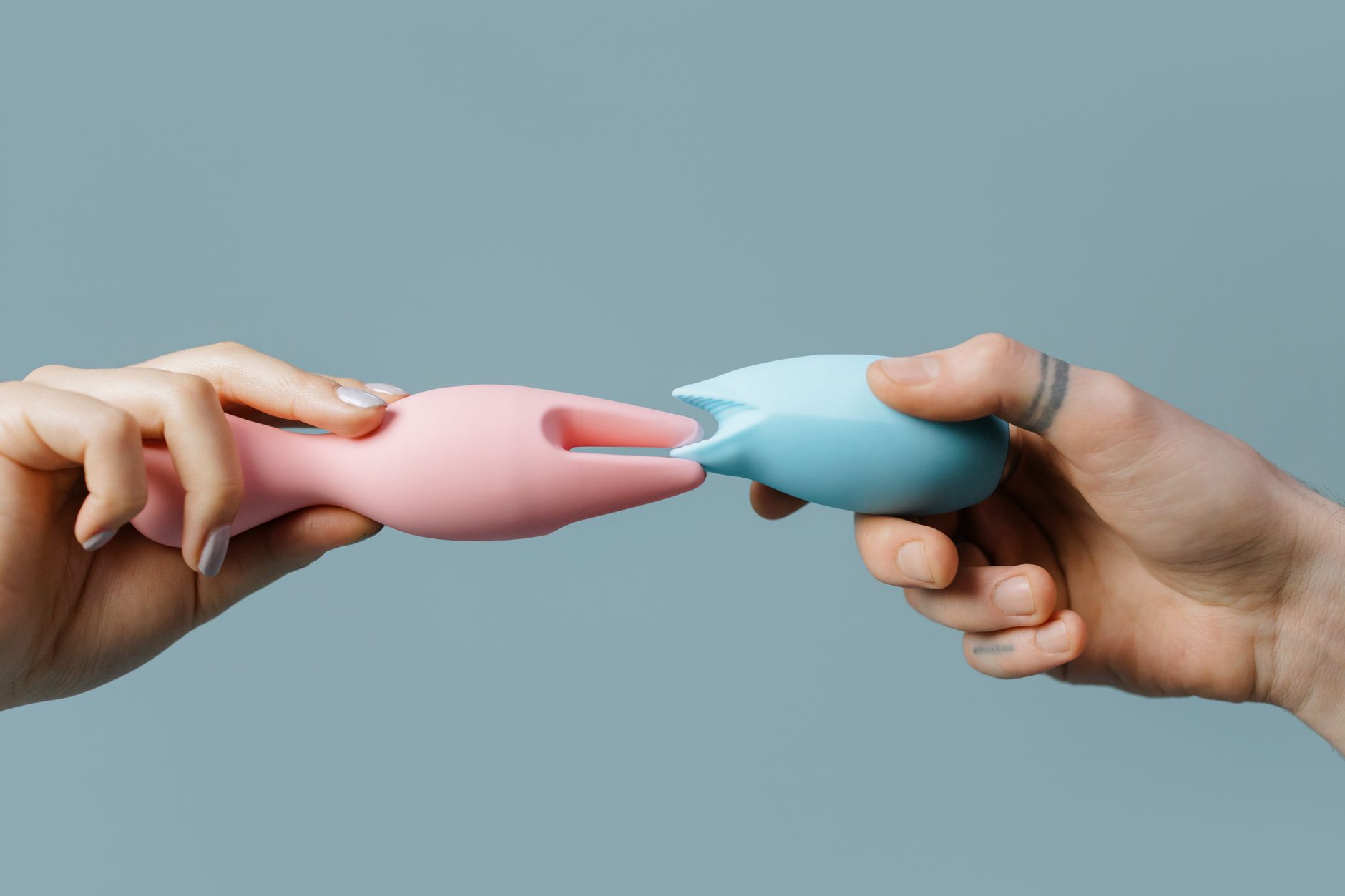
How to Use Lemon Vibrators for Better Orgasms With a New Partner
Let's be real. New relationship sex is a completely different animal. Your body is responding to someone new. The rhythm is unfamiliar. You're navigating vulnerability with a person you're still learning. And somewhere in that mix, the question shows up: will my orgasms feel the same? Will they happen at all?
Here's what I've seen across years of working with couples in early relationship stages. The presence of a lemon vibrator doesn't just solve a pleasure problem. It transforms the entire conversation you're having with your partner about sex, vulnerability, and what you actually need.
I'm going to walk you through exactly how to use lemon clitoral vibrators when you're building pleasure with someone new, and why the timing and communication matter just as much as the toy itself.
Why new partner sex feels different (and that's normal)
When you enter a new relationship, your body is operating on incomplete information. You don't yet know how this person touches you. They don't know your rhythm, your preferences, what makes your breath catch. There's no automatic groove. You're both slightly hyperalert, reading micro-signals, adjusting as you go.
Throw in the fact that new partners often have different arousal patterns than your exes. Different penis shape. Different energy. Different expectations about what sex "should" look like. Your nervous system is working overtime to process all of it.
Add one more layer: many people unconsciously shift their pleasure when they're new to someone. You might hold back orgasm because you don't want to seem too eager. You might fake enthusiasm to please them. You might forget what actually works for you because you're focused on whether you're doing it right for them.
This is where a lem vibrator changes the game. Not because it's magic, but because it gives you a concrete tool to stay in your own body while you're exploring theirs.
The conversation you need to have before introducing a toy
I'm not talking about a heavy "we need to talk" speech. I'm talking about vulnerability wrapped in honesty.
Something like: "I've used toys before and they really help me orgasm. I'd love to use one sometimes when we're together. It's not about you or what's missing. It's about what I know works for me."
That sentence does several things at once. It normalizes toys. It frames the vibrator as part of your pleasure, not a supplement to their inadequacy. It invites them in rather than springing it on them.
The vast majority of secure partners will respond well to that. If someone reacts defensively or tells you toys are "cheating," that's information worth having early. You'd want to understand whether they're insecure about their role or genuinely uncomfortable with toys in general. (And if the relationship is worth staying in, that becomes a conversation to have, not a reason to hide your pleasure.)
I've worked with couples where introducing a lemon vibrator became the door to a much deeper conversation about what each partner actually wanted from sex. Sometimes the resistance isn't about the toy at all. It's about control, or fear of inadequacy, or having been raised to believe that sex looks a certain way. Those conversations matter.
How to use a lemon vibrator during partnered sex
There are a few ways this actually works, depending on what you both want.
Solo warm-up before they enter. Use your lem vibrator alone for 5 to 10 minutes before penetration. This accomplishes several things. Your body is more aroused, which means easier access and more sensation. You're already partway to orgasm, so the shared time feels more connected rather than racing against the clock. And crucially, you're in your body instead of in your head analyzing whether this is taking too long.
During penetration. This is where a lemon clitoral vibrator becomes genuinely transformative. If you're someone who comes from clitoral stimulation and not from penetration alone, using the Lem during sex means you're finally not playing against yourself. You get the sensation of penetration plus the clitoral stimulation your body actually needs. No faking. No resentment building. Just two people working with your body instead of against it.
After they come. Some partners finish before you do. Instead of an awkward negotiation where you're trying not to take "too long," you can say something like, "I'm going to use my vibrator to finish." You get to have your orgasm. They get to stay close and present while you do. This is intimate in a way that pantomiming an orgasm never will be.
The key in all three scenarios: you're using the vibrator to serve your actual pleasure, not to perform for anyone.
Why the Lem works particularly well early on
If you're going to introduce a clitoral vibrator to a new partner, the design matters. The Lem uses gentle air-suction technology rather than direct vibration. That means it feels less intense than traditional vibrators. The pattern is rhythmic and consistent. It doesn't require a partner to hold it or position it while you're learning each other's bodies.
For new partner sex specifically, this matters because you get to focus on connection without technical logistics distracting you. You're not managing a vibrator's placement or worrying about whether the angle is right. You're present with this person while your body gets what it needs.
The permission piece (honestly the hardest part)
Here's what I notice when I work with couples. Women especially arrive in new relationships having learned that good sex means being easygoing, low-maintenance, naturally orgasmic without "all that."
That messaging is complete nonsense. And it costs you.
Using a lemon vibrator is you saying, out loud, that your pleasure is worth the small moment of asking for what you need. That your orgasm matters. That you're not going to spend years quietly frustrated because you were too polite to speak up in month three.
Your new partner needs to know that about you. They need to learn early that you advocate for your own pleasure. That you're thoughtful about what works. That you're not going to martyr yourself for the sake of "being cool about sex."
This is honestly the biggest difference I see between people who have good sex with new partners and those who don't. The ones having good sex said yes to their own needs early, tools and all.
Managing expectation mismatches
New relationships often mean different assumptions about frequency. One person wants sex three times a week. The other wants twice a month. One person needs foreplay that lasts 20 minutes. The other is ready in five.
A lemon vibrator can help you meet your own needs without making it about your partner's performance. If you know you need longer arousal time, you can use your lem vibrator solo beforehand. If you're more aroused than your partner is, you're not just waiting around. You're tending to yourself.
This actually builds better sex together because you're not developing resentment. You're taking responsibility for your own pleasure instead of expecting one person to be everything you need.
What to actually buy and use
If you're new to lemon clitoral vibrators, start with something simple. The Lem is intuitive. Five patterns, gentle to start, easy to clean. You're not going to overwhelm yourself or confuse the technology while you're already managing the vulnerability of new partner sex.
Water-based lubricant. Get it. Even if you're naturally lubricated, adding extra takes friction off the table and makes everything feel more comfortable. Your partner will appreciate it too. Silicone-based lubes can degrade silicone toys, so stick with water-based.
A small toy bag for storage. This keeps things discrete and shows your partner that you're not hiding it. You're just storing it respectfully, the way you'd store anything you care about.
Navigating the vulnerability conversation
Using a toy with a new partner is vulnerable. You're saying, "Here's what my body needs." Some people will receive that with genuine interest. Some will need a moment to process. Very occasionally, someone will react poorly.
If your new partner responds with curiosity, that's a green light. If they respond with defensiveness or shame, that's information. You get to decide whether this is someone you want to keep building intimacy with.
But here's what I've learned. Most of the time, when you show up unapologetically in your own pleasure, partners follow. They feel less pressure. They get to stop performing and just be present with you. Sex gets better for both of you because you're both actually there.
The long-term payoff
I've worked with couples who introduced toys in the first few months and couples who waited five years. The ones who started early had a massive advantage. They normalized communication about pleasure. They established that sex was a space where both people got to have needs. They built trust early by being honest.
The couples who waited often found that adding toys later felt more awkward because they'd already created a sexual template that didn't include that conversation.
You don't need a lemon vibrator to have good sex with a new partner. But if you know you respond well to clitoral stimulation, having one isn't a luxury or a sign that something's wrong. It's you showing up for your own pleasure in a way that actually serves the relationship.
People Also Ask
Will using a lemon vibrator make my new partner feel inadequate?
Not if you frame it correctly. A vibrator doesn't replace them. It complements what you're doing together. Most secure partners actually feel relieved. You're no longer silently frustrated. You're getting what you need. That's way better for both of you than faking orgasms or resenting them for not instinctively knowing how to get you there.
How soon into dating is it okay to mention I use toys?
Within the first few sexual encounters, honestly. You don't need to bring it up on the first date. But once you're in the bedroom together, waiting weeks or months to mention it can feel deceptive. Bring it up naturally: "I usually use a vibrator to come. Is that cool with you?" Most people appreciate the directness.
Can I use a lemon clitoral vibrator during all types of sex?
Yes. During penetrative sex, during oral sex, during hand stimulation. The Lem is small and easy to maneuver. You can hold it yourself or your partner can. It works.
What if my new partner wants to use the vibrator on me but doesn't know how?
Show them. Let them hold it, guide their hand, tell them what pressure and patterns feel good. This is actually a really intimate moment because you're teaching them how to pleasure you. It brings them into your experience instead of it being something you do separately.
Is there a difference between using a toy alone versus with a partner?
Yes. Solo, you can experiment and find what works. With a partner, you're managing connection and communication alongside pleasure. That's not bad. It's just different. The payoff is that you're building shared knowledge about your body instead of keeping it private.
What if we try it once and it feels weird?
Sex with a new person is often weird at first. That's normal. Try it a few times before deciding. Sometimes it feels awkward the first time and natural the second. And sometimes a tool just isn't for you, which is also fine. But give it a genuine chance before ruling it out.
Here's the thing I tell couples I work with. The sex you have with a new partner doesn't have to be perfect or instinctive. It has to be honest. You both get to show up as yourselves. You both get to ask for what you need. And sometimes, a simple tool like a lemon vibrator becomes the thing that makes that conversation possible.
If you're unsure about how to navigate pleasure conversations with a new partner, that's what I'm here for. Reach out to chat.