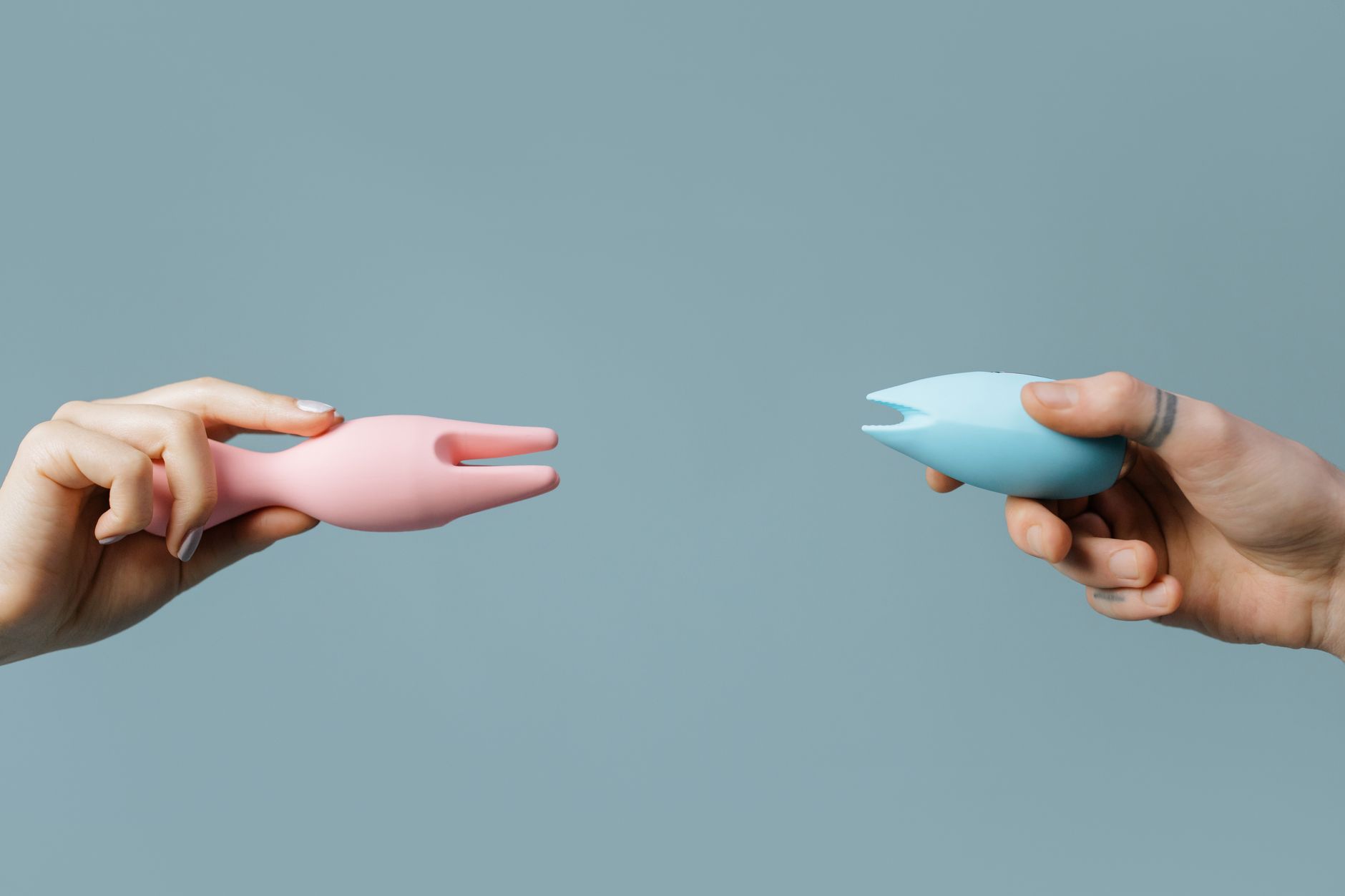
Here's what happens when the routine takes over
Somewhere around year three, five, or ten of a long-term relationship, sensation flattens. Not because you've stopped loving your partner. Not because anything's wrong. It's the nervous system's version of adaptation. When touch becomes predictable, your body stops lighting up the same way. Your brain has mapped the terrain so thoroughly that it no longer has to pay attention.
This is normal, common, and completely fixable. The pathway back isn't about forcing novelty or resenting the person you love. It's about deliberately interrupting the pattern.
Why routine dulls sensation (and what that actually means)
Your nervous system loves efficiency. When something happens the same way repeatedly, your brain allocates fewer resources to noticing it. This works great for driving to work. It's terrible for pleasure. A touch you felt acutely in year one becomes wallpaper by year seven.
This isn't a relationship problem. It's a neurology problem. And it has a specific solution: introducing sensation patterns the body hasn't mapped yet.
Lemon vibrators, and specifically the suction technology behind them, create a sensation your body genuinely hasn't experienced before. Suction stimulates the clitoral network in a way that manual touch or even traditional vibration doesn't replicate. When your nervous system encounters something novel, it wakes up. Attention returns.
The three ways numbness shows up
Physical numbness is the most obvious. You're touching yourself or being touched, and the sensation feels muted, like you're hearing music through a wall. Orgasms feel distant or require significantly more effort.
Cognitive numbness is subtler. Your mind wanders during sex. You're checking the mental to-do list or mentally reorganizing the bathroom. Your body's there but your attention isn't.
Responsive numbness happens when your body simply doesn't respond the way it used to. You used to get aroused quickly. Now it takes thirty minutes or doesn't happen at all.
Lemon clitoral vibrators address all three, but through different mechanisms. The novelty wakes up your cognitive attention. The sensation pattern itself stimulates nerve endings more directly than familiar touch. And the intensity provides a neurological jolt that can reset responsive patterns.
How suction technology rewires sensation
A traditional vibrator moves back and forth or in a circular pattern. Your body learns this. Suction is different. It creates a gentle vacuum against the clitoral tissue, stimulating a broader nerve network while reducing direct friction. For someone whose body has gone numb to vibration, suction often feels like discovering sensation for the first time.
The Lem, Nancy Lemontoy's flagship lemon sucker toy, uses air-pulse technology that's fundamentally distinct from what your body already knows. You can feel a difference between patterns one and two. The sensation doesn't blend into a dull hum.
Start with the lowest intensity setting. You're not chasing climax here. You're waking up nerve endings. Spend five to ten minutes on level one, moving the toy slightly, exploring where sensation concentrates. This is not foreplay. This is reconnecting.
Waking sensation up alone first (here's why)
I recommend exploring solo before reintroducing the toy to partnered sex. This sounds counterintuitive if your goal is reigniting things with a partner, but it's actually the fastest path there.
When you're alone, you have zero performance pressure. Your nervous system relaxes. You can spend time noticing small sensations without worrying about whether your partner's arm is getting tired or whether you're taking too long. You're also building a reference point. Once you've felt what true sensation is supposed to feel like with the Lem, you recognize when it's missing again.
Give yourself three to four solo sessions before involving your partner. Fifteen to twenty minutes each. Use the same time of day if possible. Consistency helps your nervous system prepare and respond more readily.
Introducing the toy to partnered sex without awkwardness
If you're bringing a lemon clitoral vibrator into an existing relationship, the conversation matters more than the toy. Not a heavy conversation. Something like: 'I've realized my body's gotten used to the same stimulation. I want to feel things again. Can we try this together?'
That sentence does several things. It owns the change without blaming your partner. It positions the toy as a tool for reconnection, not a criticism. And it asks for participation, which makes it collaborative rather than isolating.
The first time you use it together, keep it simple. Your partner doesn't need to operate it. You do. You're the expert on your own sensation. Your partner can use their hands, mouth, or just be present. The Lem handles clitoral stimulation. Everything else stays as familiar as you want it to be.
Many couples find that introducing sensation-altering toys actually deepens intimacy. You're both learning what wakes your body up. That's information. That's closeness.
Layering sensation for sustained intensity
After a few sessions, numbness often starts lifting. The nervous system has been genuinely stimulated in a new way. But the brain adapts quickly. You might notice sensation dulling again after two or three weeks.
This is where layering comes in. Start with the Lem at level one. After five minutes, increase to level two. After another five, move the toy slightly or shift your position. You're keeping the nervous system engaged by continuously varying the input.
You can also combine the toy with penetration, manual touch, or nothing else. The specificity of clitoral suction means it pairs well with almost anything. Solo, partnered, with hands involved, without. Each variation creates a slightly different sensation pattern.
The key is not chasing orgasm. Orgasm is a side effect of attention. When you're focusing on sensation itself, orgasm usually follows more reliably than when you're trying to force it.
Managing expectation shifts in long-term relationships
One thing I see frequently: people revive sensation and then feel pressure to perform that revived sensation consistently. They think, 'Now I've turned it back on, I should want sex three times a week again.' Not necessarily.
What you're actually rebuilding is responsiveness. The ability to feel. That's foundational, but the frequency and desire level might stay different from earlier relationship years. You might wake up sensation and discover you want quality over quantity. That's valid.
Talk about what you're discovering. 'When I use the Lem, I notice my body responds better if we've had time to relax first.' Or 'I'm realizing I want more foreplay now than I did before.' Sensation changes create information. Use it.
When to suspect something deeper is happening
If sensation remains completely numb after four to six weeks of consistent use, something else might be at play. Certain medications dull sensation. Hormonal shifts do. Depression and anxiety have direct neurological effects on arousal and pleasure.
If you suspect hormonal changes, talk to a doctor. If anxiety or depression feels relevant, a therapist trained in sexual health can help. The Lem and lemon clitoral vibrators are genuinely useful tools, but they're not a substitute for addressing underlying medical or mental health factors.
The relationship dimension people don't talk about
When sensation dulls in a long-term relationship, there's often a relational undertone. Not always. But frequently. Resentment, unaddressed conflict, or simple emotional distance can suppress sexual response just as much as routine can.
If you're using lemon vibrators and sensation isn't improving, it's worth asking: Do I actually want to reconnect with my partner? Am I avoiding something? These aren't failures. They're information. Sometimes reviving sensation means recognizing you need different conversations or different boundaries in the relationship itself.
FAQ
How long does it take for sensation to start returning?
Most people notice some shift within three to five sessions of consistent use. It's not usually a dramatic overnight change. It's more like a dimmer gradually brightening. You'll start noticing small sensations you haven't felt in years. After two to three weeks of regular use, many people report significantly improved responsiveness.
Can I use a lemon vibrator if I'm not experiencing complete numbness?
Absolutely. You don't need to be numb to benefit from a lemon sucker toy. Many people use lemon clitoral vibrators simply because the sensation is different and pleasurable. Variety itself is stimulating. You don't need a problem to solve to enjoy a new tool.
Should my partner be present the first time I use the toy?
That's entirely your choice. Some people prefer solo exploration first to get comfortable with the sensation and the device. Others like having their partner there from the start. Neither is better. Whichever feels right in your relationship is the right answer.
Will my body get used to the Lem the way it gets used to routine touch?
Eventually, yes. Your nervous system will adapt. But adaptation takes much longer with varied stimulation than with predictable touch. By the time you've adapted to the sensation, you'll likely have built new response patterns with your body and your partner. And you can always introduce other variations. The point isn't to find a toy you'll use forever unchanged. It's to interrupt numbness long enough to rebuild responsiveness.
What if sensation improves but we still feel distant as a couple?
Pleasure is one layer of intimacy. It's not the whole thing. If you're using lemon vibrators successfully but emotional distance remains, that's a separate conversation worth having. Sometimes physical reconnection opens the door to emotional reconnection. Sometimes you need both working together. A couples therapist trained in sexual health can help navigate that.
Can I use a lemon vibrator if my partner doesn't approve of toys?
Yes. Your body is yours. That said, understanding your partner's resistance can help. Some people worry toys mean they're not enough. Others have cultural or religious baggage around sex toys. A conversation that explains you're using this to reconnect with your own sensation, not to replace them, can sometimes shift the conversation. If approval stays withheld, that's information about the relationship worth examining.
Getting sensation back isn't complicated, but it does require intention
Years together can make pleasure feel like it's gone. It's not. It's dormant. Your nervous system has simply mapped the terrain so thoroughly that it stopped paying attention. Lemon vibrators, with their distinct sensation patterns, interrupt that numbness. They wake your body up. And when your body wakes up, intimacy, responsiveness, and genuine pleasure often follow.
The tool works best paired with honesty. Honesty with yourself about what your body actually needs. Honesty with your partner about what's changed and why. That's how you move from routine to real connection again.