
Let's start with the honest part
Most conversations about toys in relationships don't happen. One person quietly wants them. The other person doesn't know, or knows and feels weird about it. The conversation never happens because it feels loaded, risky, or like it's asking for rejection. So people stay stuck.
Here's what I've seen across hundreds of couples: this friction isn't actually about the toy. It's about what the toy means to each person. Once you separate those two things, everything shifts.
What the mismatch usually looks like
The reasons one partner resists are almost always predictable. I see the same three.
"I'm not enough." Your partner worries that if you want a lemon clitoral vibrator, they're not satisfying you. The toy becomes proof of failure. This is the most common blocker, and it's also the one that responds fastest to direct conversation.
"I don't understand why you need it." This partner isn't threatened so much as confused. They had orgasms with you. You had orgasms. Why add something else? To them, it reads as wanting something different, which feels like a pivot away from partnership.
"It feels clinical or weird." Some people grew up in spaces where sexuality was shame-adjacent. A toy can trigger all that discomfort. This one takes time and patience, but it's absolutely movable.
Meanwhile, the person who wants the toy often doesn't voice it clearly because they're managing their partner's feelings before having their own. That's its own trap.
Why this conversation matters more than the toy itself
I'm going to say something that might feel counterintuitive: the toy isn't the point. The point is whether you can talk about what you want without it being an indictment of your partner.
If you can't say "I want to explore lemon vibrators because my body responds differently to suction than it does to friction" without your partner hearing "you don't turn me on," you have a communication problem. The toy just made it visible.
Here's what I recommend: have the conversation about the conversation first. Not about the toy itself.
How to set up the conversation
Don't ambush. Don't hand over a clitoral vibrator and hope they understand. Pick a time when you're both relaxed, not in bed, not in conflict.
Say something like: "I want to talk about something that matters to me, and I want us to do it in a way where we both feel heard. Can we do that?"
Then start with what's true for you, not what you want from them: "I've been noticing that my body responds really well to clitoral suction. I want to explore that more. It's not about you. It's about me learning my own pleasure."
Pause. Let them respond.
If they go straight to "you're not satisfied," don't defend or reassure. Instead, name what you're hearing: "I hear that you're worried this means something is wrong. That's not what's happening. I'm just trying to understand myself better."
Then explicitly separate the two conversations: "Whether I use a toy or not, I want us to stay connected. Those are different things. Can we talk about what would help you feel secure about that?"
That last line is crucial. You're not asking them to be fine with it immediately. You're asking them to name what would help.
What actually helps the hesitant partner
Most people get there, but they need to know three things.
1. The toy is for your body, not a replacement for theirs. A lemon clitoral vibrator does something specific. It creates sustained, precise stimulation that many bodies respond to faster than manual touch can. That doesn't mean hand touch is bad. It means the toy is a different sensation. Help them understand: "If you use a toothbrush instead of your finger to reach a spot on your back, that doesn't mean your finger failed. You just needed a different tool."
2. Toys can actually bring you closer. This is where the research helps. Couples who incorporate toys often report more intimacy, not less. Because suddenly you're not stressed about hitting the right spot. You can focus on kissing, on closeness, on being together. The pressure drops. The connection deepens.
3. Boundaries and communication come first. If your partner is hesitant, suggest that they control the toy in your body at first. Many resistant partners become enthusiastic once they have agency and see the response it creates. "You hold it. You decide when and where. Let's explore together." That's collaboration instead of something happening to them.
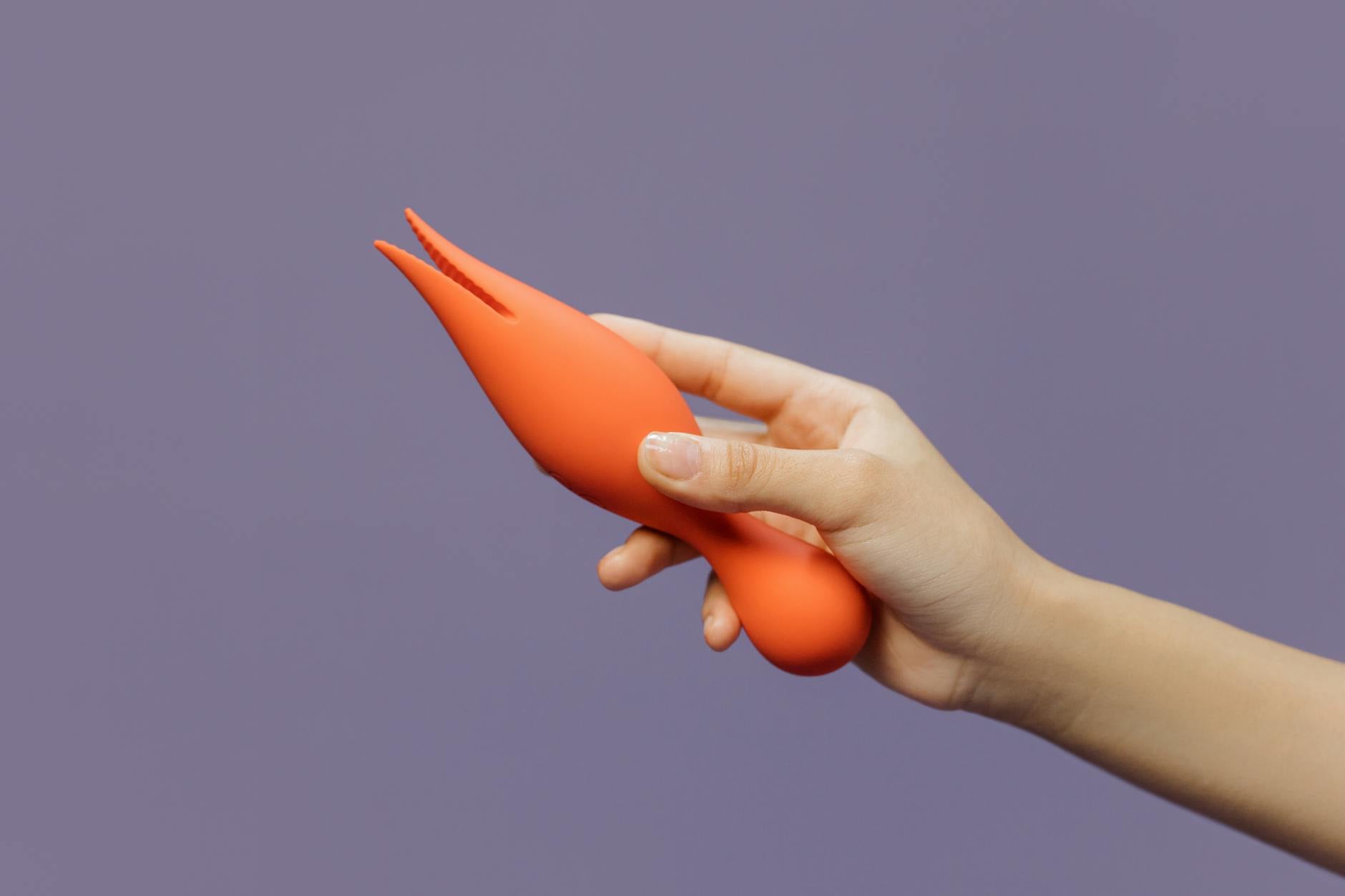
Photo by cottonbro studio on Pexels
The middle ground: starting small
If your partner is willing but wary, don't start with a full sensory experience. Start with something lower stakes.
Maybe you use a lemon clitoral vibrator by yourself while they're nearby. Not performatively. Just matter-of-factly. Let them see that it's not weird, not dramatic. Then maybe the next time, they watch. Then maybe they touch you while you're using it. Then maybe they hold it.
Each step should feel optional, not like a checkpoint in a test they're failing.
One couple I worked with had the resistant partner start by just reading the Nancy Lemontoy packaging with the other. No toy involved yet. Just understanding what air-suction technology actually does, how it's designed, why it works. Knowledge reduced the strangeness. Then curiosity replaced resistance.
When it's deeper than hesitation
Sometimes the resistance isn't about toys. It's about feeling unseen, or undesired, or like sex has become one person's project instead of a shared thing.
If that's underneath, the toy conversation won't actually land. You'll introduce a lemon sucker and the real issue will still be there, just now with more tension.
That's when you might need to talk to someone trained in this. A sex therapist or a couples counselor can help you figure out what the toy is standing in for. Usually it's worth it.
What to do if your partner still says no
Here's where I'm firm: "no toys" is a boundary they get to set. And "I want to explore toys" is a boundary you get to set. Both are valid.
What's not valid is one person pretending to be fine and then resenting the other. And what's not valid is pressuring someone into something that genuinely doesn't feel safe to them.
If you're at a true impasse, that's a sign you need help. Because this isn't actually about the toy. It's about whether you can negotiate wanting different things without one person sacrificing themselves.
Most couples find a path. One partner might decide they're curious after all. The other might decide it matters less than they thought. Or you might agree that solo exploration is fine but partnered use isn't. The actual arrangement matters less than getting there together.
The conversation after you've started using lemon vibrators together
Once your partner has moved past the hesitation and you're actually exploring clitoral vibrators together, the maintenance conversation is lighter but still important.
Check in. "What's working for you about this?" "Anything that feels off?" "Do you want to try anything different next time?"
These aren't heavy conversations. They're the same check-ins you'd do about anything else that affects you both. Lemon vibrators are just another piece of shared pleasure, not a referendum on your relationship.
FAQ: Partners and clitoral vibrator comfort
Why does my partner feel threatened by toys when I say it's not about them?
Because deep down, most of us learned that being "enough" means being everything. So if you want something additional, it can feel like a deficit on their side. This is cultural conditioning, not logic. Naming it directly helps. "This isn't about you not being enough. This is about my body being complex." That reframe can take the sting out.
Can using a lem vibrator with my partner actually improve our sex life?
Yes, often. When one person has been stressed about not reaching orgasm easily, introducing a tool that helps changes everything. The pressure drops. You can relax. You can focus on closeness instead of outcome. A lot of couples report their sex life actually improves because the pressure is off.
What if my partner wants to use it on me but I feel self-conscious?
Start with your partner's hands while using it by yourself first. Get comfortable with how it feels when you're in control. Then let them hold it. Most self-consciousness fades once you realize they're not judging you. They're usually just watching your response and thinking about how hot it is.
How do I know if my partner's hesitation is normal or a sign of a bigger issue?
Normal hesitation: they need time, ask questions, slowly warm up. Bigger issue: they make you feel ashamed for wanting pleasure, they refuse to discuss it, they use it as ammunition in arguments later. If it's the second pattern, the toy isn't the problem. The way they handle disagreement is.
Should I use lemon vibrators during partnered sex or only by myself?
Both work. Some couples use them together every time. Others use them solo and use partnered time for something else. There's no right answer. What matters is that you both chose it.
What if I try all this and my partner still refuses?
Then you have a choice. You can let it go. You can set a boundary about exploring solo. Or you can recognize that this might be part of a bigger pattern of one person's needs always getting sidelined. That last one is worth examining, possibly with a therapist.