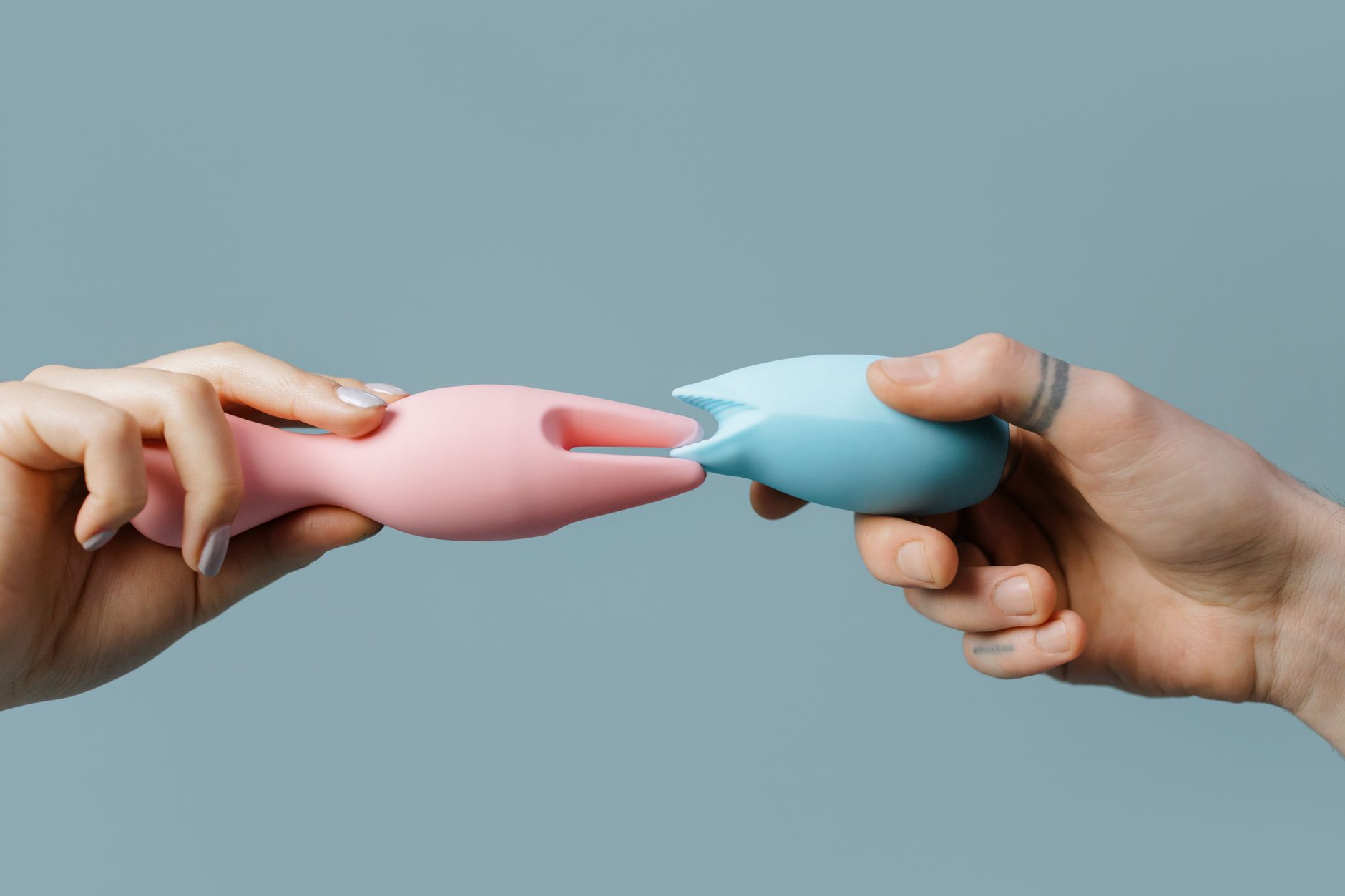
Here's what nobody tells you about mismatched sex drives
One partner wants sex three times a week. The other wants it once every two weeks. One initiates constantly. The other never does. One person's pleasure feels tied to frequency. The other's feels tied to quality and presence.
This is one of the most common friction points I see in couples therapy, and it's almost never actually about the sex. It's about feeling desired, rejected, pressured, or invisible.
The good news: lemon clitoral vibrators and devices like the Lem aren't just for solo play. They're a bridge language that helps couples with wildly different pleasure frequencies find middle ground without resentment creeping in.
Why frequency mismatches happen (and why they're not your fault)
Desire doesn't work like a light switch. It's shaped by stress, hormones, attachment patterns, work load, health, medication, and how safe you feel in the relationship. One partner might have a natural baseline of twice weekly. The other might be once monthly and completely satisfied. Neither is broken.
The problem arises when the higher-desire partner starts interpreting lower frequency as rejection. "If they wanted me, they'd want sex more often." But that's a logic error. Lower frequency doesn't mean lower love or lower attraction. It means different wiring.
Similarly, the lower-desire partner often feels pressured and guilty, which tanks desire even further. Guilt is genuinely one of the fastest ways to kill arousal. Once you're having sex out of obligation, the spiral begins: resentment creeps in, touch becomes transactional, and actual desire becomes even harder to access.
That cycle is brutal, and it's fixable. But the fix doesn't look like "compromise" on frequency. It looks like expanding what intimacy means.
The conversation you need to have first
Before you introduce any tool, including lemon vibrators or a lemon sucker, you need to separate two conversations that usually get tangled:
Conversation A: "I miss feeling desired by you." This is about connection, attention, and being valued. It's not actually a sex-frequency conversation.
Conversation B: "I need orgasms more often than you do." This is a body-need conversation. It's also not about your partner, necessarily. It's about your nervous system.
Most couples collapse these into one conversation, which creates the impossible demand: "You need to want sex more often because I need to feel loved." That puts your partner in an impossible position.
Honestly though, the cleanest thing you can do is name each one separately. "I feel rejected when you don't initiate, and I want to work on that together" is a different conversation than "My body needs regular orgasms, and that's something I deserve to have, whether or not you're in the headspace for partnered sex right now."
The second one opens a door. The first one, without clarity, just feels like blame.
How lemon vibrators change the equation
Here's what happens when you introduce a clitoral vibrator into this dynamic:
The higher-desire partner gets regular physical release without making it about the lower-desire partner. This is huge. It removes the pressure from them to perform or be available. Paradoxically, removing that pressure often makes them want sex more frequently because it stops feeling like work.
The lower-desire partner doesn't have to provide something they can't access right now. They can support their partner having pleasure without it being partnered sex. They can be in the room, can help, can watch, can touch in other ways. Or they can give permission for solo time. Either way, it's collaborative rather than adversarial.
A lemon clitoral vibrator, whether that's the Lem or another suction-style device, is particularly useful here because it doesn't require a partner's presence or participation. It's not a replacement for partnered sex. It's a bridge. It keeps pleasure flowing while you rebuild the deeper intimacy that frequency mismatches erode.
Practical patterns that actually work
Pattern One: Protected solo time. "I'm going to use the Lem on Tuesday and Friday evenings while you're doing your thing." Make it predictable, not secretive. It removes the guesswork and the guilt.
Pattern Two: Collaborative solo play. Your partner sits with you. They're fully clothed if that feels right. They can touch you elsewhere, kiss you, talk to you, or just be present. There's no pressure for them to be aroused or to participate. They're witnessing and supporting. This is wildly more intimate than partnered sex sometimes.
Pattern Three: Foreplay with an exit ramp. You start together, and if your partner isn't getting into it or isn't feeling it, you can move into solo play with a lemon vibrator while they touch you or stay connected in another way. No awkward transition. No one's left hanging. Both people get to stay involved.
Pattern Four: Scheduled partnered sex plus autonomous pleasure. You agree that partnered sex happens, say, once a week on Thursday. Your partner also knows you're using the Lem solo on Sunday and Wednesday, and they're genuinely okay with that because it means they're not carrying the full weight of your pleasure needs.
What actually changes in the relationship
Here's what I've watched happen when couples give themselves permission to use tools like lemon vibrators instead of fighting about frequency:
First, the resentment drops. Fast. Both partners stop keeping score. The higher-desire partner isn't storing up anger that their needs aren't being met. The lower-desire partner isn't feeling guilty or pressured into unwanted sex. That shift alone transforms the emotional texture of the relationship.
Second, touch becomes about pleasure again instead of obligation. You're not having sex to make your partner feel loved. You're having sex because you both want to. That's a different quality entirely.
Third, you can actually address the real issue. If the real issue is "I don't feel desired," then you can work on that with actual connection strategies, date nights, and attention. If the real issue is "Stress is killing my sex drive," then you can problem-solve around stress. But you can only see the real issue once frequency stops being a weapon.
When a vibrator isn't enough
If one partner has completely lost desire because of trauma, medical issues, depression, or serious relationship rupture, a lemon clitoral vibrator won't fix it. That's clinical territory. A good sex therapist or couples counselor becomes necessary.
Also, if frequency mismatch is a symptom of deeper incompatibility, tools help but they don't solve the fundamental issue. Sometimes two people genuinely have incompatible needs. That's worth naming honestly.
But in most cases, where desire exists but frequency doesn't match, creating space for both partners to have pleasure without shame or pressure changes everything.
The bigger picture
Mismatched desire is one of the most common reasons couples end up in my office. It's also one of the most fixable because it doesn't require anyone to change their baseline desire. It requires permission, conversation, and sometimes a tool like a lemon vibrator that gets both people's needs met without resentment.
You don't need to want sex at the same frequency as your partner. You do need to stop making frequency a measure of love. Once you separate those, everything shifts.
FAQ: Mismatched desire and pleasure tools
How do I bring up using a vibrator if my partner thinks toys mean I don't want them?
Lead with the actual truth: "I want us both to feel good. Our bodies have different rhythms right now, and I want to make sure I'm not pressuring you. Using a tool solo means you're not carrying my pleasure needs alone, and we can focus on connection when you actually want partnered sex." Separate desire from obligation.
Will using a lemon vibrator solo make me want my partner less?
No. Research consistently shows the opposite. Regular orgasms improve mood, reduce stress, and actually increase desire. What changes is that your pleasure stops feeling dependent on your partner's availability, which actually strengthens the relationship.
What if my partner is threatened by the vibrator itself?
That's usually about deeper fears: "Will they prefer it?" "Does it mean I'm not enough?" Address the fear, not the tool. Be clear: "This isn't replacing you. This is filling a gap so you're not carrying the full weight of my needs." Some partners need time and reassurance. Some need to watch and see how it actually works. That's fair.
How often is too often to use a vibrator if my partner rarely initiates?
There's no "too often." Your body deserves regular pleasure. Period. If you're using it three times a week and your partner is having sex with you once a month and they're genuinely okay with that setup, you're fine. The problem only exists if someone's resentful.
Can we use a lemon sucker together if we have different desires for how often?
Absolutely. One person can be using the Lem while the other touches them elsewhere, talks to them, or holds them. It doesn't require simultaneous arousal or desire. It just requires willingness to be close.
What if we try this and it doesn't help the resentment?
Then the frequency mismatch is a symptom of something else: unresolved conflict, disconnection, or incompatible needs. A therapist who specializes in couples work can help you figure out what's actually driving the resentment and whether it's fixable. Tools help, but they're not a substitute for real relationship repair when something deeper is broken.
Next steps
If frequency mismatch is creating tension in your relationship, start by having the two conversations separately: one about feeling desired, one about your body's needs. You might find you're not actually that far apart. Then, if it feels right, give yourselves permission to use tools like lemon vibrators or a lemon clitoral vibrator without shame.
Your pleasure matters. Your partner's comfort matters. Those two things don't have to be in opposition. They just need clarity and permission.
If you want to talk through your specific situation, reach out to us. We're here to help.