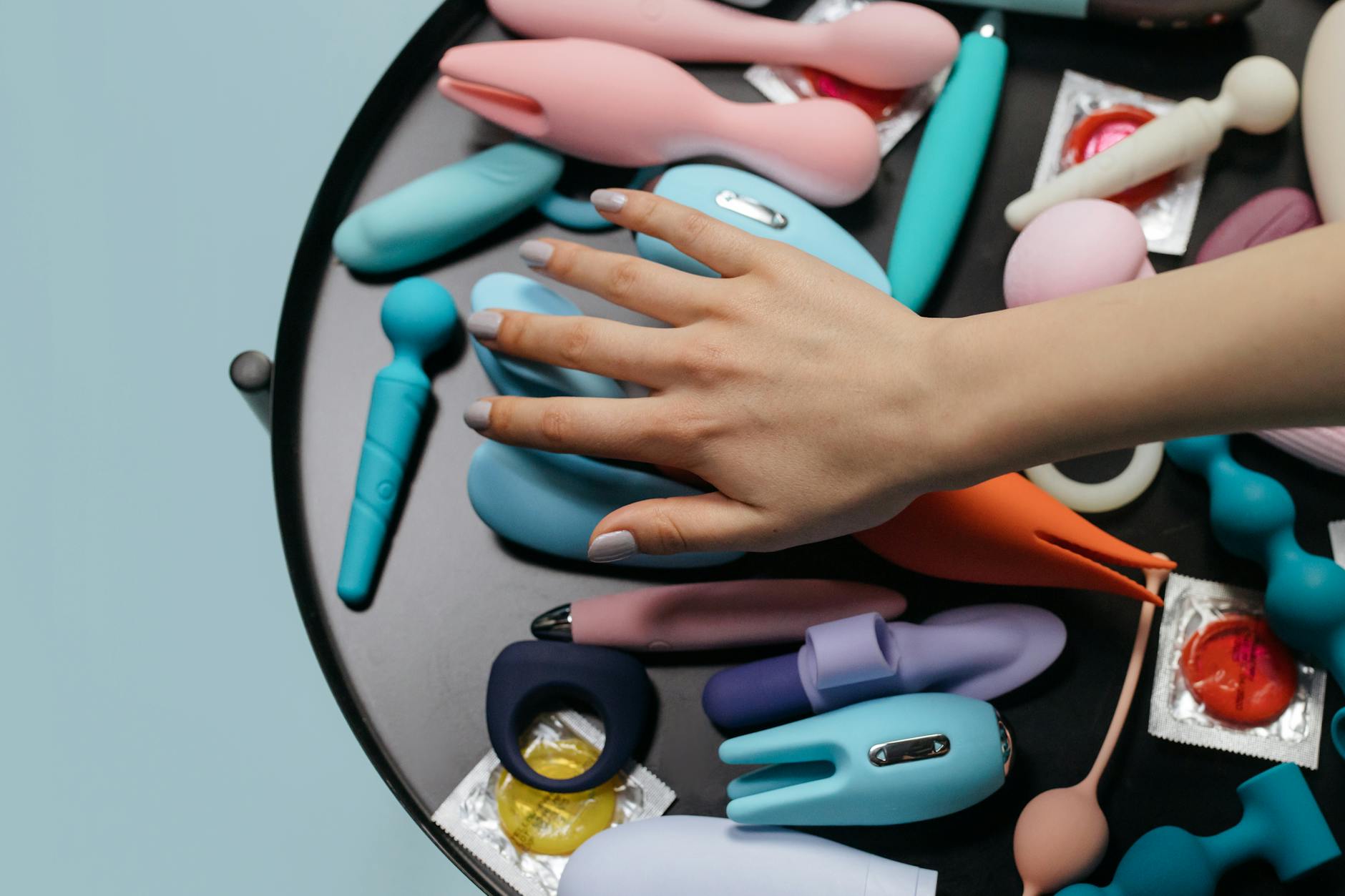
Let's talk about what hormones actually do to your clitoris
Your clitoris is not some static pleasure button. It's a hormone-responsive organ, which means it changes throughout your menstrual cycle, after you start or stop birth control, during pregnancy, postpartum, and as you move toward perimenopause. That's not weakness. That's biology.
Here's the gap in most sex conversations: we talk about hormones affecting mood or skin, but we barely whisper about what happens to sensation itself. If you've noticed that your clitoris feels more or less sensitive than it used to, you're not imagining it. The tissue is literally thinner or thicker. The nerve endings are more or less active. The blood flow is different.
This matters because it means your approach to pleasure might need to shift too. And that's where lemon clitoral vibrators become genuinely useful. They work with your changing body rather than against it.
How hormones reshape clitoral tissue
Estrogen is the main player here. When estrogen is high (like mid-cycle on your period or early in a birth control cycle), your clitoral tissue swells slightly, blood flow increases, and sensation can feel amplified. Everything is more reactive, more engorged, more "turned on" at baseline.
When estrogen dips (late cycle, certain birth control phases, perimenopause), the tissue thins. The clitoris becomes less engorged. Sensation can feel muted, almost like you're touching yourself through a layer of static.
Progesterone adds another layer. It can muffle sensation and make arousal feel slower or harder to access. Testosterone (yes, people with ovaries produce it) directly fuels desire and can amplify clitoral sensation too.
Postpartum and while breastfeeding, prolactin spikes and both estrogen and testosterone tank temporarily. Many people describe their clitoris feeling completely numb during this window. It usually returns, but the timeline is unpredictable.
Same pattern happens with hormonal birth control. Some methods suppress your own hormone production more aggressively than others, which means some people lose sensation on the pill in a way they don't on the ring or copper IUD.
Why lemon vibrators work better when sensitivity shifts
Suction-based clitoral stimulation like the Lem vibrator works differently than traditional vibration. Instead of relying on direct friction against tissue, suction creates a gentle vacuum that draws the clitoral tissue up into the cup.
Why does this matter for hormone fluctuations? Three reasons.
First, suction adapts to your tissue thickness. When your clitoris is less engorged (low estrogen phases), suction is actually more effective at drawing blood into the area and creating sensation. Friction-based vibrators can feel too intense or numb-making when tissue is thin or sensitive. Suction doesn't require that same direct pressure.
Second, you can control the intensity much more granularly. The Lem runs from gentle pattern one to much stronger patterns. On high-estrogen days, you might jump to pattern four or five. On low-estrogen days, you might stay at pattern one or two for longer, letting the suction gradually build arousal instead of trying to force it.
Third, suction doesn't rely on your clitoris already being somewhat erect. Traditional vibrators work best when tissue is already engorged and responsive. Suction actually helps create that engorgement. During low-sensation phases, this is genuinely helpful.
Lemon vibrators (and other clitoral vibrators generally) also work with the tissue you have right now, not against it. You're not trying to chase the sensation you had last month. You're working with your current baseline.
Tracking your hormone cycle to use lemon toys smarter
Here's a practical framework.
If you menstruate, map your own sensitivity curve over two months. Most people's cycles run about 28 days, but yours might be 23 or 35. Note when your clitoris feels most responsive and when it feels most muted. Don't aim for consistency. Aim for pattern recognition.
You'll probably find that days 9-14 (around ovulation) feel easiest. Your clitoris is engorged, responsive, ready to go. Days 20-28 (late cycle) often feel more resistant. You might need longer warm-up, more lube, lower intensity, or all three.
If you're on hormonal birth control, the pattern is different. Your sensitivity is likely more flattened overall (which is why some people actually feel more disconnected on the pill). But you probably still have micro-variations. Your body isn't a static machine, even on hormones.
If you're postpartum or breastfeeding, don't expect a curve. Expect a flat line for a while. The good news is it usually returns. The timeline is just frustratingly individual.
If you're perimenopause, you're dealing with wild fluctuation. One week your clitoris feels normal. The next week it feels like it belongs to someone else. Lemon clitoral vibrators give you a tool that flexes with these swings instead of staying rigid.
Once you know your pattern, adjust your approach:
- High-sensitivity phases: You can go faster, stronger, shorter sessions. Your nervous system is primed.
- Low-sensitivity phases: Longer warm-up, multiple shorter sessions instead of one long one, lower intensity initially, more lube (because hormone shifts also affect lubrication), patience.
- Transitional days: Stay flexible. Some days surprise you.
Keep a note in your phone if that helps. One word per day: "responsive," "flat," "weird," "numb." After two months, you'll have a map.
The postpartum and breastfeeding reality
If you've given birth or are nursing, here's the unvarnished truth: your clitoris probably feels absent right now. That's common. Prolactin suppresses both estrogen and testosterone while your body is redirecting all its energy to milk production.
You might feel: numbness, a sense of general disconnection from your genitals, arousal that starts and then just stops, or zero interest in any sensation at all.
This is not permanent. But the timeline is completely variable. Some people regain sensation within weeks. Others take months or until they stop breastfeeding entirely.
During this phase, lemon vibrators can actually help for two reasons. One, even if you can't feel much, the stimulation is still there. Your nervous system is still receiving input, even if it feels muted. Two, you're not trying to force something that isn't there. You're just gently exploring what sensitivity might be returning.
Many people find that resuming any sexual activity at all, even if sensation feels dampened, helps speed up the return to normal sensation. So a gentle, patient tool like the Lem is actually better than nothing or than trying to brute-force intensity.
Birth control changes and sensitivity resets
If you've recently changed birth control, your clitoral sensitivity might have shifted dramatically. This is especially true if you switched from a low-dose pill to a copper IUD, or from the ring to the pill, or from hormonal to non-hormonal methods.
The adjustment period usually runs four to twelve weeks. Your clitoris might feel suddenly much more sensitive (like switching off hormonal suppression can do), or it might take time to recalibrate.
During this reset window, lemon vibrators help when you have a sensitive clitoris because you can modulate intensity precisely. If you've never felt this level of sensitivity before, lower patterns help you explore without overwhelming yourself.
Same thing in reverse: if you've switched to hormonal birth control and sensation feels suddenly flattened, lemon clitoral vibrators' suction mechanism helps compensate for the dampening effect.
When to see a doctor about hormone-related sensation changes
Most hormone-driven changes in clitoral sensitivity are normal and temporary. But some warrant medical attention.
See someone if:
- Numbness or decreased sensation lasts longer than three months postpartum or after a birth control change.
- You develop new pain alongside numbness (that's different from sensation change).
- You suspect a thyroid issue (low thyroid can tank libido and sensation).
- You're on antidepressants that might be dampening sensation and want to explore adjustments or augmentation.
Your GP or gynecologist can check your hormone levels if you want hard data. This is optional, but some people find it helpful to know their actual estrogen or testosterone number rather than guessing.
What actually helps during unpredictable phases
Five concrete things:
Lube, lube, lube. Hormone shifts change lubrication as much as they change sensation. Water-based lube compensates and also helps suction work even more smoothly.
Longer warm-up. When your clitoris isn't engorged, give yourself 15-25 minutes before expecting intensity. Start with pattern one on your lemon vibrator and let arousal build.
Lower initial settings. On the Lem, that means patterns one through three. Let your body tell you when (if) it wants to intensify. You can always turn it up.
Multiple short sessions. If arousal stalls, stop. Wait an hour. Try again. Your nervous system might respond better to spaced stimulation than marathon sessions when hormones are suppressing sensation.
Patience with your baseline. Your clitoris right now is not your clitoris last month. Don't compare. Just work with what's here.
The broader pattern
Hormone shifts happen. Your body is not broken. Your clitoris is not broken. It's adapting to a system that's designed to flex with your reproductive and endocrine life.
The tools that work best are the ones that adapt too. Lemon clitoral vibrators, with their precise intensity control and suction-based approach, happen to be exactly that kind of tool.
Your pleasure is not a fixed thing. It's a landscape that moves with your hormones. Once you stop fighting that and start exploring it, everything gets easier.
People also ask
Can birth control pills actually make my clitoris less sensitive?
Yes. Hormonal birth control suppresses your natural hormone production, which can reduce clitoral blood flow and tissue engorgement. The effect varies wildly. Some people barely notice. Others feel their sensation tank. If you're on the pill and feeling numb, talk to your GP about trying a different formulation or method. Your sensitivity might return within weeks of switching.
Does perimenopause make you permanently less sensitive down there?
No. The fluctuation is real and frustrating, but permanent desensitization is not a thing. What happens is your hormones swing dramatically from month to month, which means your clitoral sensitivity swings too. Some weeks you're baseline normal. Other weeks you feel numb. Once you fully transition through menopause and your hormones stabilize at a new normal, most people find sensation actually improves. You're no longer riding a hormonal roller coaster.
How long after giving birth does clitoral sensation come back?
It varies from a few weeks to several months, and sometimes longer if you're breastfeeding. The postpartum hormone drop is steep and dramatic. Prolactin production while nursing keeps estrogen and testosterone suppressed. Once you wean or reach a few months postpartum, sensation typically starts returning. Some people feel a spark by week six. Others don't feel normal until month four or five. Patience is your main tool.
Are lemon vibrators or clitoral vibrators safe to use during hormone fluctuations?
Completely safe. You're not doing anything harmful. Your clitoris can't break or become more numb from stimulation. If anything, gentle consistent stimulation during low-sensitivity phases can help wake things back up as hormones shift. The only caution is if you're in pain (separate from just numbness) you want to address that separately.
What's the difference between hormonal numbness and normal variation in sensation?
Hormonal numbness usually feels sudden or comes with other symptoms: mood changes, temperature shifts, unusual lubrication changes, sometimes breast tenderness. Normal variation is subtle and tied to your cycle or known life changes (new birth control, postpartum, etc.). If your numbness came out of nowhere and isn't tied to anything obvious, a doctor visit is worth it to rule out thyroid or other stuff. If it coincided with a life event, it's almost certainly hormonal.
Can I use the Lem vibrator if I'm postpartum and healing?
Wait until you've fully healed if you had a vaginal birth with tearing or a c-section. That's usually four to six weeks minimum, sometimes longer. Once you're cleared for exercise or penetration, you're fine using a clitoral vibrator on the external clitoris. It won't disrupt healing. If you want to start exploring sensation earlier, just use your hands or a very gentle external stimulation. Patience is the gift you give yourself right now.
What comes next
Your clitoris is not a static button. It's a living, responding part of your body that shifts with your hormones, your cycle, your birth control, your life stage. Once you accept that, you can stop trying to find one "right" way to pleasure yourself and start actually listening to what your body needs right now.
Lemon clitoral vibrators give you the flexibility to meet your changing body where it is. Not where it was. Not where you think it should be. Where it actually is.
If you're navigating sensitivity shifts and want to talk through what might work for your specific situation, reach out to the team. We're here.