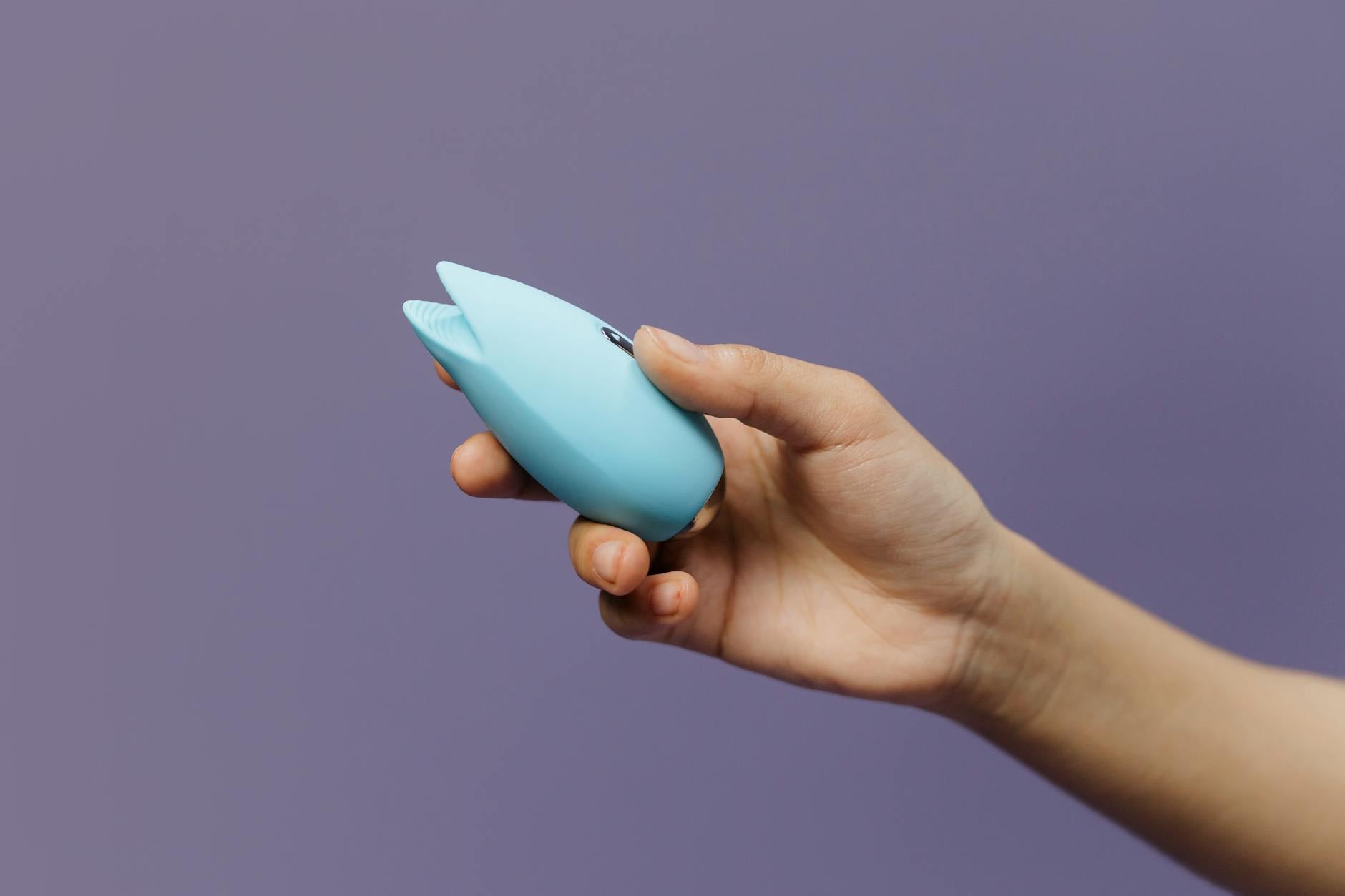
Here's the thing about anxiety and arousal
Anxiety doesn't just make you feel tense. It literally hijacks your arousal system. When your nervous system perceives a threat, blood flow diverts away from your genitals and toward your muscles. Your clitoris, which needs steady circulation to engorge and become sensitive, gets starved of exactly what it needs. Desire doesn't just vanish. It gets physiologically blocked.
Most of what I hear from clients is some version of this: "I want to feel turned on, but my brain won't let me." That's not a character flaw. That's your autonomic nervous system doing its job badly, and you need tools to interrupt that pattern.
Lemon vibrators work differently than other toys because they engage the nervous system in a way that can actually calm the anxiety response while rebuilding sensation.
Why anxiety kills arousal in the first place
Your nervous system has two main modes. Sympathetic activation is your fight-or-flight state. It's useful when there's an actual threat. Parasympathetic activation is rest-and-digest. That's where pleasure lives.
Anxiety keeps you stuck in sympathetic overdrive. Your brain is scanning for danger. Your shoulders are up by your ears. Your jaw is clenched. Your pelvic floor is tight. In that state, arousal isn't optional. It's neurologically unavailable.
Add in the layer of performance pressure. Most people with anxiety around sex are also anxious about being anxious. They worry they won't get aroused, which creates more anxiety, which makes arousal even less likely. It's a feedback loop that gets tighter with each cycle.
How lemon clitoral vibrators interrupt the cycle
Lemon vibrators like the Lem use air-suction stimulation instead of vibration alone. That's significant because air-pulse technology works on a different neural pathway than traditional vibration.
When anxiety has your nervous system locked in sympathetic mode, sudden intense stimulation can actually reinforce the stress response. Your body interprets it as another threat. That's why some people find traditional vibrators overwhelming when they're anxious.
Air-suction stimulation is gentler in the initial stages. It builds sensation gradually, which signals safety to your nervous system rather than urgency. It's the sensory equivalent of a slow breath instead of a gasp.
Second, the rhythmic nature of lemon suction devices mimics a relaxation response. Repetitive, predictable stimulation is grounding. Your brain recognizes the pattern and gradually downshifts out of threat detection mode. That's why many clients tell me that even before they're aroused, the physical act of using the device feels calming.
Creating the nervous system conditions for pleasure
The device alone isn't magic. You need to create the conditions where your body can actually respond.
Start with your environment. Anxiety thrives in chaos. If you're using a lemon vibrator in a space where you're worried about interruption or visibility, your sympathetic nervous system stays activated. Invest in privacy. Close the door. Mute your phone. This isn't luxury. This is neurological necessity.
Build in a buffer before using the toy. Don't go from work stress or relationship conflict directly into solo time with a clitoral vibrator. Your nervous system needs a transition. Take a shower. Go for a walk. Do some breathing work. Ten to fifteen minutes of parasympathetic activation before you start makes an enormous difference in how your body responds.
Use the lowest settings first. With lemon vibrators, this is easy because most have multiple intensity patterns. Start at pattern 1 or 2. Let your body get used to the sensation. This is not about rushing to orgasm. This is about teaching your nervous system that this input is safe. Spend 5 to 10 minutes at low intensity before you move up.
Pay attention to your breath. When anxiety hijacks arousal, people often hold their breath without realizing it. That keeps the nervous system in threat mode. If you notice you're not breathing, consciously slow it down. Longer exhales activate the parasympathetic response more than long inhales do. Try a pattern where you breathe in for four counts and out for six.
When pleasure starts to rebuild
For a lot of people dealing with anxiety-related arousal blocks, the first session with a lemon vibrator isn't about orgasm. It's about sensation. It's about discovering that your clitoris can still feel something without your brain spiraling into performance anxiety.
That's the real win. Not the orgasm. The sensation. The proof that your body hasn't forgotten how to respond.
Over time, as you use the device consistently in a calm environment, your nervous system starts to decouple arousal from anxiety. Your body learns that this specific context is safe. Arousal becomes more accessible.
Addressing the specific anxiety patterns that show up
Performance anxiety. The pressure to orgasm ruins arousal faster than almost anything else. If you're using a lemon clitoral vibrator and you're anxious about whether you'll come, you're working against yourself. Set an intention that you're exploring sensation, not chasing a target. If an orgasm happens, great. If it doesn't, you've still reset your nervous system and rebuilt some connection to your body. Both are wins.
Partner-related anxiety. Sometimes the anxiety isn't about your own performance. It's about what your partner thinks, or whether you're "normal," or whether using a toy means something about your relationship. That's relationship anxiety, not arousal anxiety, and it needs a different conversation. Before you use a lemon vibrator, get clear on what's actually making you anxious and address that separately.
Trauma-related anxiety. If your arousal block connects to trauma or abuse, a vibrator is not a replacement for therapy, but it can be part of your healing toolkit. The gentleness of air-suction stimulation and the control you have over intensity can help you rebuild a sense of safety in your own body. Work with a trauma-informed therapist alongside this practice.
Building a sustainable practice
Once you've started using lemon vibrators successfully, the goal isn't to use them forever. The goal is to use them consistently enough that your nervous system gets retrained.
I recommend my clients aim for two to three times per week, at least for the first month. This isn't a performance metric. It's a frequency that seems to reset the nervous system response without adding pressure.
As your comfort builds, arousal will start to happen more spontaneously in other contexts too. Your nervous system is learning that arousal is safe. That learning generalizes.
When to bring a partner in
If you're in a relationship and your anxiety around arousal is affecting your sex life, solo exploration with a lemon vibrator should come first. Build your own confidence and your nervous system's response in private. Then, when you're ready, bring your partner into the conversation.
Many couples find that once one partner has rebuilt their arousal response, it becomes easier to reconnect as a pair. You're not starting from a place of pressure. You're starting from a place where you know your body can respond.
The slow rebuild is the real work
Anxiety-related arousal blocks don't usually resolve in one session. They resolve through consistent, gentle, pressure-free exposure to pleasure. A lemon clitoral vibrator is one of the most effective tools for that because it's gentle enough to feel safe and effective enough to actually work.
If you're ready to explore this, start where you are. Low intensity. Private space. No performance expectations. Your nervous system will respond when it's ready, and a well-designed clitoral vibrator like the Lem makes that response possible.
People also ask
Can lemon vibrators help with anxiety-related ED or erectile dysfunction?
Lemon vibrators are designed for clitoral stimulation, so they don't directly address erectile dysfunction. However, if anxiety is affecting a partner's arousal, many couples find that one partner's renewed confidence and pleasure helps ease performance pressure on both sides. The ripple effect matters.
How long does it typically take to rebuild arousal after anxiety has blocked it?
There's no universal timeline, but most people see noticeable shifts within three to four weeks of consistent practice two to three times per week. Some feel changes within a few sessions. Others need longer. The nervous system retrains at its own pace.
Is it normal to feel anxious even while using a clitoral vibrator?
Completely normal. If that happens, ease off the intensity, slow your breath, and focus on grounding sensations like the feel of the toy, the texture of the surface you're on, the temperature of the room. Your nervous system will respond to those cues. This is part of the retraining process.
Can I use lemon vibrators if I'm on anxiety medication?
Yes. In fact, some anxiety medications can affect arousal, and a lemon clitoral vibrator can help you rebuild sensation even while medicated. If you're concerned about specific medication effects, talk to your prescriber, but there's no blanket contraindication.
What's the difference between a lemon vibrator and other clitoral vibrators for anxiety?
Lemon suction devices use gentle, rhythmic air-pulse stimulation that activates the nervous system differently than traditional vibration. For anxiety specifically, that gentler approach can feel safer and more grounding. Other clitoral vibrators work fine once you're less anxious. During the anxiety phase, air-suction technology is often more effective.
Should I tell my partner I'm using a lemon vibrator to address arousal anxiety?
That depends on your relationship and communication style. Some couples benefit from transparency. Others prefer solo exploration first, then partnership later. There's no single right answer. What matters is that you're not keeping secrets because you feel shame. If privacy is about safety and autonomy, that's healthy. If it's about fear, that might be worth exploring.
The takeaway
Anxiety doesn't have to be permanent. Your nervous system can retrain. And a lemon clitoral vibrator is one of the gentlest, most effective ways to help that retraining happen. Start low, go slow, breathe, and give your body time to remember that pleasure is still available to you. If you want to talk through your specific situation or need more personalized guidance, reach out. I'm here to help.