
How to Introduce Lemon Vibrators to Your Partner Without Awkwardness
Let's be real: the conversation about bringing a clitoral vibrator into your relationship doesn't have to feel like you're asking permission to break a rule. And it definitely shouldn't feel like a rejection of your partner or your sex life together.
But here's what I see in my practice all the time. People sit on this idea for months. They buy the Hello Nancy lemon vibrator and hide it. They think about bringing it up a dozen times and chicken out. The longer they wait, the more loaded the conversation becomes, until finally they blurt it out at the worst possible moment and nobody wins.
The truth is simpler: this is one of the easiest relationship conversations you can have. Not because it's not important, but because what you're actually asking for is something almost nobody will say no to once they understand it.
Why your brain thinks this is harder than it is
There's a story we inherited about what introducing a vibrator means. The story says it means: your partner isn't enough. Your partner failed at something. You're ashamed. You're hiding something.
None of that is true, and your partner probably knows it isn't true. But the story is so old and so loud that it still lives in your nervous system.
Here's the actual story: you want to know your body better. You want to feel better. You want to share that with someone you trust. That's it. It's not a referendum on your partner's performance. It's not a complaint. It's information about what works for you, and your partner probably wants to know that.
Most partners, when they get over the initial surprise, feel relieved. Not because they were secretly inadequate, but because now there's a solution to something that might have been frustrating for everyone.
The timing question (and why it matters more than you think)
Don't bring this up during sex. Don't bring it up during an argument. Don't bring it up in the five minutes before you leave for work.
Bring it up in a moment when you're both relaxed, fed, reasonably undistracted, and not actively naked. Saturday afternoon. After dinner. A drive where you're side by side and not making eye contact (this actually makes it easier for a lot of people).
The reason timing matters is neurological. When your partner is flooded with cortisol, or flooded with arousal, or running late, their brain can't actually hear the nuance of what you're saying. They'll land on the hot-button worry instead of the actual information.
Pick a moment when you both have at least 20 minutes to talk without interruption. Not because you'll need that long, but because it signals that you're taking this seriously and you're not going to vanish if there are questions.
The language that actually works
Start with curiosity and pleasure, not problem-solving.
Not: "I'm not satisfied" or "I need something different."
Yes: "I've been thinking about what makes me feel amazing, and I'm curious about trying something new."
Not: "Do you think I could use a vibrator?"
Yes: "I want to explore something with you. I found this lemon clitoral vibrator that I'm really interested in trying."
The difference is subtle but it matters. The first framing invites shame and defensiveness. The second invites curiosity.
Then name why. And be honest. Is it because you want to experience a different sensation? Because you're curious? Because orgasm takes longer for you now and you want to close that gap? Because you want to feel something new together? All of these are good reasons. Pick the one that's actually true.
Then ask a question that invites partnership: "I'd love to know what you think about that" or "Would you be interested in trying this together?"
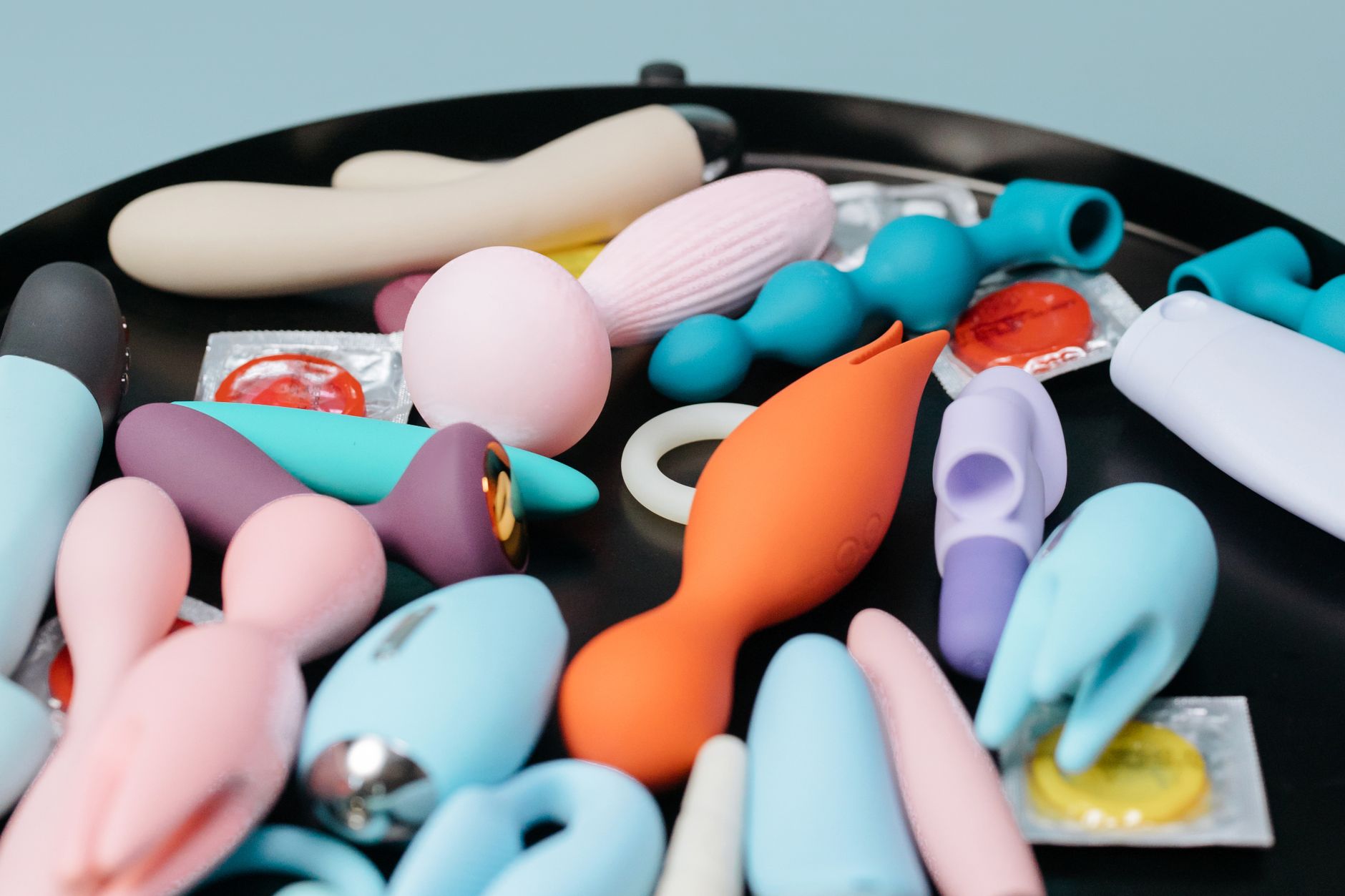
Photo by cottonbro studio on Pexels
What partners actually worry about (and how to address it)
If your partner reacts with surprise or hesitation, they're probably cycling through one of four fears. Knowing this helps you respond instead of getting defensive.
Fear 1: "You're not satisfied with me." Respond with: "I'm satisfied with you. This isn't about you. It's about knowing my own body better, and I want to share that with you." The word "with" is important. This is an addition, not a replacement.
Fear 2: "This means you'll want something more extreme eventually." Respond with: "I'm interested in this specific thing right now. I'll tell you if that changes, and we can talk about it then." This is honest and also reassuring.
Fear 3: "I won't know what to do with it." Respond with: "I can show you exactly what feels good. We can figure this out together, or I can use it solo if you prefer. Let's see what works." Many partners end up loving the collaborative element once they get over the initial weirdness.
Fear 4: "This is embarrassing." Respond with: "It doesn't have to be. Lots of couples use these. It's actually pretty normal." And then move on. You don't need to defend the normalcy of it. You can just live it.
Note that none of these responses are defensive. You're not arguing. You're just translating what they actually need to hear.
The practical part (yes, you still need to talk about it)
Once your partner is on board, talk about logistics. When would you want to use it? During partnered sex, or solo? If partnered, how? If solo, where does it live? How do you care for it?
This might feel clinical, but it's actually where a lot of partners feel more comfortable. You've moved from "are you okay with this idea" to "okay, how do we do this practically," and that's the moment most people relax.
This is also where you can mention that quality matters. A Hello Nancy lemon vibrator isn't the same as a dollar-store vibrator. It's designed for your comfort, it's body-safe silicone, it's quiet, it's intuitive. You've thought about this.
What if your partner says no
Rarely, a partner will say no. Here's what that usually means: not "never," but "not yet." Often it means "I need time to think about this" or "I'm not ready to talk about it."
If that happens, you can say: "That's okay. I'm not going anywhere. If you want to talk about it later, I'm here." And then you actually let it be.
You don't push. You don't buy one secretly. You don't sulk. You let them have time. Sometimes a partner just needs to sit with the idea for a few weeks and then they come around.
If after a few months of silence you're still frustrated, that's worth a different conversation. It's worth saying: "I notice we haven't talked about this since I brought it up. I want to understand what's holding you back." That opens a door to actual communication instead of avoidance.
After you've had the conversation
If your partner is interested, consider using it together first. Not because you need permission, but because it makes the experience shared instead of secretive. Many couples find that watching a partner experience pleasure is its own kind of turn-on.
If you want to use it solo, that's also fine. Just be honest about that plan upfront.
And then just use it. The first time will feel a tiny bit awkward. By the third time it'll feel normal. By the tenth time nobody will even think about it.
The secret that nobody tells you: most of the awkwardness about introducing toys lives entirely in the conversation before you actually do it. Once you're in the middle of sex and you're both feeling good, the vibrator becomes just another part of the experience. The story you wrote in your head about how weird this would be dissolves almost immediately.
FAQ on introducing lemon vibrators to partners
Should I ask permission to use a vibrator during sex with my partner?
No. Your body is yours. But yes, communicate about it first. There's a difference between needing permission and needing a conversation. You don't need his or her blessing, but your partner does deserve to know that this is happening, ideally before it happens. Think of it less like asking permission and more like sharing information that affects them.
What if I already bought a lemon vibrator and I'm scared to tell my partner?
First, breathe. Second, tell them as soon as possible. The longer you keep it secret, the more of a thing it becomes. If you say "I bought this because I wanted to explore my own pleasure," that's a conversation. If they find it in three months, that's a betrayal. Choose the conversation.
Will my partner think I'm only interested in the vibrator and not in them anymore?
Maybe at first. But actions change minds. When your partner sees that using a lemon vibrator doesn't replace sex with them, that it actually makes you more available for pleasure and more relaxed in your body, they'll understand. Reassure them verbally, then show them with behavior.
Is it weird if my partner wants to use the vibrator on me?
Not at all. This is actually one of the most common scenarios and it's often a relief to both partners. Your partner gets to be involved, you get to experience something new, and you both benefit. If that sounds appealing, mention it when you bring it up.
What if my partner seems into it but then never actually uses it with me?
Then you have a slightly different conversation. "I noticed we talked about using this together and it hasn't happened yet. What's holding you back?" Sometimes partners are shy. Sometimes they're worried about doing it wrong. Sometimes they just got busy. But if you never ask, it stays invisible and weird.
How do I know if my partner is secretly uncomfortable with this?
You don't, unless you ask. But you can look for signs: they avoid the topic, they're quiet about it, they change the subject, they seem tense when you mention it. If you notice any of these, check in. "I get the sense you might have reservations about this. I'm genuinely curious what they are." Most partners will open up if you ask directly and warmly.
The bottom line
Introducing lemon vibrators to your relationship is not a big deal. The conversation about it is also not a big deal, as long as you approach it with honesty and warmth instead of shame and apology.
Your partner probably already suspects you might want to explore something new. They might even be relieved you brought it up. And if they need time to adjust to the idea, that's fine too. Give them that grace and then move forward.
What matters is that you're advocating for your own pleasure and doing it as a team. That's the healthiest possible way to navigate this, and it's exactly the kind of conversation that builds real intimacy.
If you're still uncertain about how to navigate this conversation with your partner, we're here to help. Reach out and let's talk about what's getting in your way.