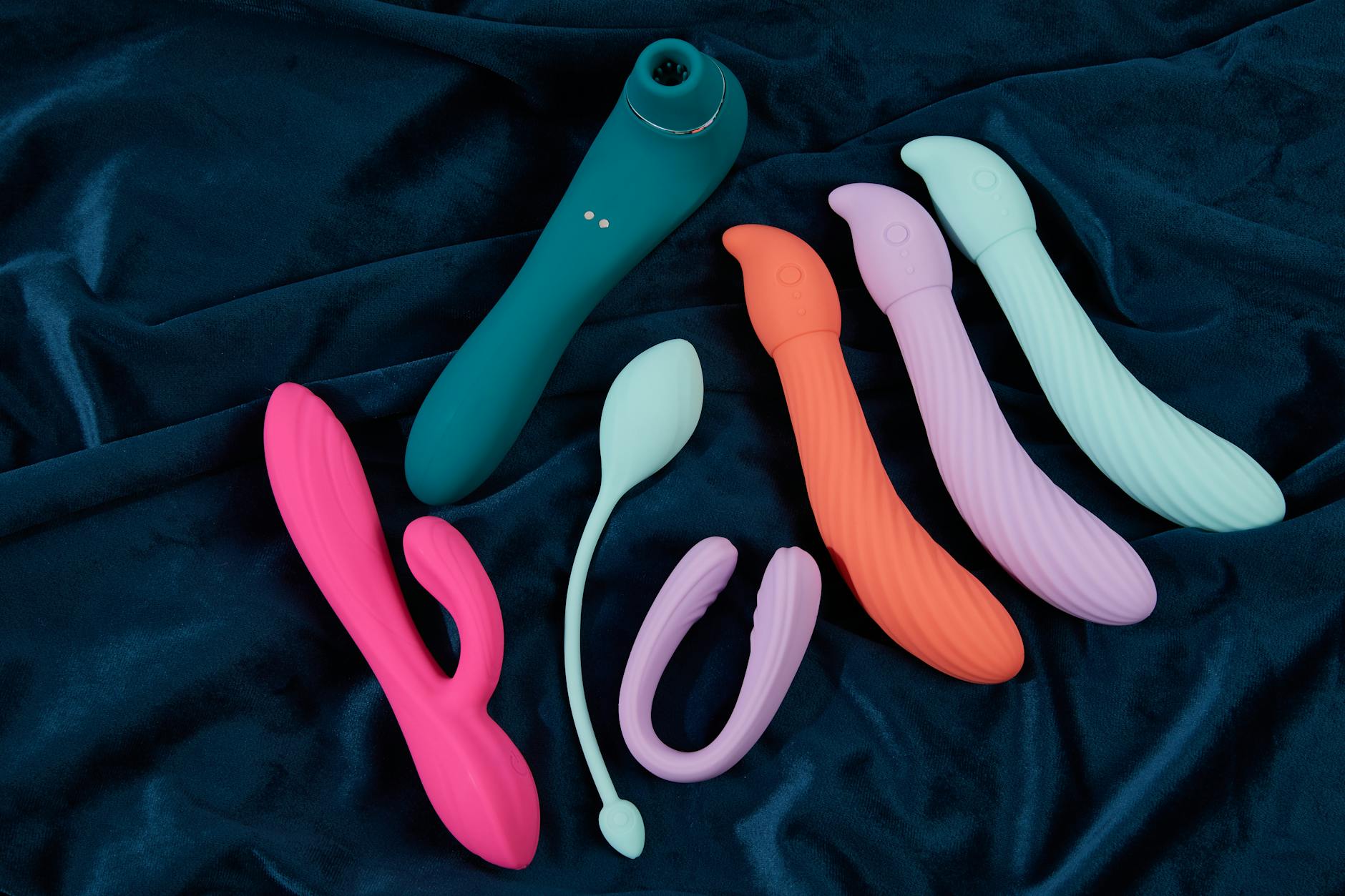
Let's talk about the actual difference
Here's what nobody explains clearly: lemon vibrators and wand vibrators feel completely different, even though people use "vibrator" as a catchall for both. One uses suction. One uses vibration. Your clitoris literally experiences them through different nerve pathways, and that matters way more than most toy conversations admit.
If you've tried a traditional wand and thought "this feels like way too much, too fast, too numb," that's not you being broken. That's your body telling you something real: wand vibrators work through pure mechanical movement, and for about 40 percent of people, that's either too intense, too surface-level, or doesn't build the kind of pleasure arc that leads anywhere good. Lemon clitoral vibrators work differently. They're worth understanding before you write off the whole category.
What wand vibrators actually do
Wand vibrators, traditionally, are all about speed and direct contact. They press against the clitoris and vibrate at frequencies that range from 50 Hz to 300+ Hz depending on the model. That's a lot of mechanical stimulation hitting one small area in a rapid, repetitive pattern.
For some people, this is exactly what they want. The intensity cuts through everything else and creates a kind of focused, almost meditative pressure. Wands are also versatile. You can use them on your inner thighs, your vulva more broadly, or during partnered sex as external stimulation.
Here's where wands hit their wall: the stimulation is one-directional. It's press and buzz, press and buzz. For people with sensitive clitorises, this can feel overwhelming or even slightly numb after a few minutes. For people who need a building, graduated sensation to reach arousal, wands can feel like jumping straight to 80 percent intensity with no on-ramp. And because the vibration is so direct, many people find their clitoris actually desensitizes faster with a wand, meaning they need more pressure or speed to feel the same thing.
How lemon vibrators work differently
Lemon vibrators, particularly designs like the Lem, use gentle suction technology paired with subtle pulsation. Instead of pressing and vibrating, they create a small pressure change that feels like a soft kiss meeting rhythmic stimulation. It's a completely different mechanism.
Suction stimulates the sensitive nerve clusters around the clitoral head without the intense friction of direct vibration. You're not numbing the area. You're actually bringing blood flow and sensitivity to the surface. Many people describe the sensation as warm, building, almost like a light massage that gradually intensifies instead of hitting full force immediately.
One huge advantage: your body doesn't desensitize the same way. Because the stimulation pattern is gentler and uses a different mechanism, you can use a lemon clitoral vibrator for longer stretches without hitting that plateau where nothing feels like anything anymore. That's not magic. It's neurology. Your nerve endings are responding to suction, not vibration, so they stay engaged.
Intensity and control: completely different
Wand vibrators give you one control knob basically: speed. Faster equals more intense. Slower equals less intense. Most wands have maybe three to five speed levels, which sounds like options until you realize they're often just "medium annoys me," "this is perfect," and "this is too much." There's not a lot of nuance.
Lemon vibrators like Hello Nancy's design offer more granular control. The Lem, for example, has multiple pulse patterns and gentler starting intensities that let you actually ease into sensation rather than leaping into it. This matters hugely if you're restarting after a break, if you're recovering from surgery or trauma, or if you just have a sensitive clitoris on any given day.
The other piece: wand vibrators are basically all-or-nothing tools. You either turn them on, or they're off. Lemon clitoral vibrators let you explore the space between off and full intensity, which is where a lot of pleasure actually lives for people.
What the research actually shows
Studies comparing vibrator types consistently find that people report higher satisfaction with air-pulse (suction-based) devices than with traditional vibrators, particularly for people who describe themselves as easily overwhelmed, sensitive, or struggling to reach orgasm with standard vibration.
One reason: the activation pattern. When a wand vibrator hits your clitoris, it's activating the same nerve fibers continuously at the same frequency. Your nervous system basically gets used to it. The sensation plateaus. With suction-based stimulation like the Lem, the pressure pattern is rhythmic but not constant vibration, which keeps your nerve endings engaged longer.
Another factor researchers note: wand vibrators can actually numb the clitoris if used at high intensity for prolonged periods. This isn't permanent, but it's real. People often respond by increasing the speed even more, which is the opposite direction they actually needed to go. Lemon vibrators have a lower numbing risk because the mechanism is different.
Which one should you actually try
If you've never used any kind of vibrator before, a lemon clitoral vibrator is genuinely a better entry point than a wand. Sounds counterintuitive. It's not. Here's why: wands teach your body to expect intensity. Lemon vibrators teach your body to expect pleasure that builds. That's a different nervous system response, and starting with the gentler, more gradualist tool means you're not training your clitoris to demand high-intensity stimulation from the beginning.
If you've used wand vibrators and found them overwhelming, frustrating, or numbing, absolutely try a lemon sucker design. You're not broken. Your clitoris is just telling you it prefers a different mechanism. Many people who write off vibrators entirely haven't tried anything but wands, and they're actually describing a mismatch, not an inability.
If you have a sensitive clitoris or any history of trauma or pain, lemon clitoral vibrators are worth starting with. The gentleness of suction-based stimulation can make a huge difference in your ability to relax and receive sensation without tensing up.
If you're someone who loves intense, fast-build orgasms and has never had an issue with wands, you might not need to switch. What you should avoid: assuming because a wand works that all vibrators work the same way. They don't. And if wands have ever left you feeling numb, overstimulated, or unable to reach climax, the issue isn't your body. It's the tool.
The hybrid approach
Honestly, the best setup is probably having both. A lemon vibrator like the Lem for when you want to focus on your clitoris and build sensation gradually. A wand for when you want quick, intense stimulation or want to involve your whole vulva in the experience. They're not competing. They're different tools for different moods and different pleasure goals.
Many people find that exploring with both teaches them something useful about their own body. You might discover that you actually prefer building gradually but want the intensity of a wand at the peak moment. Or you might find suction is your complete jam and you never need anything else. Neither answer is right or wrong. It's just information about what works for you.
The key piece that gets lost in a lot of "vibrator comparison" conversations: your pleasure isn't one-size-fits-all, and the mechanism that works best for someone else might feel completely wrong for you. That's not a flaw in you or the toy. It's just biology.
When to consider a lemon sucker specifically
If you're experiencing numbness with traditional vibrators, a lemon clitoral vibrator becomes worth prioritizing. If you've been told your clitoris is "too sensitive" and you're looking for stimulation that doesn't feel painful, suction-based designs genuinely work differently.
If you're in a relationship and your partner has been using a wand on you that leaves you overstimulated or emotionally disconnected, switching to a lemon vibrator can completely change the dynamic. Gentler doesn't mean less pleasurable. It often means more pleasurable because you're actually present for it.
And if you're just starting to explore your own pleasure after a long break, choosing a lemon clitoral vibrator over a wand means you're building your baseline around sensation that feels good rather than sensation that feels intense. That's a legitimate pleasure advantage.
The real takeaway
Lemon vibrators and wand vibrators aren't just different intensities of the same thing. They're different mechanisms working through different nerve pathways. Your job is to figure out which one your clitoris actually prefers. And the only way to do that is to try, pay attention to how your body responds, and trust what you learn about yourself. You're not supposed to just accept whatever feels "normal." You're supposed to find what actually feels good.
People also ask
Are lemon vibrators quieter than wand vibrators?
Generally yes. Most suction-based lemon clitoral vibrators operate much more quietly than traditional wands. Wands tend to have a buzzing sound that increases with speed, while lemon vibrators like the Lem produce more of a gentle, rhythmic hum. If noise is a concern in your living situation, a lemon vibrator is often the better choice. You get similar or better sensation at a much lower sound level.
Can you use a lemon vibrator with a partner during sex?
Absolutely. Many people find that lemon vibrators are actually easier to use during partnered sex than wands because the positioning is simpler and the sensation is more graduated. A wand can feel overwhelming to you while your partner is also moving, but a lemon vibrator's gentler suction can enhance sensation without overstimulating. Some couples use a lemon vibrator on the vulva while having penetrative sex. Others use it as foreplay. The options are pretty open.
What if I like both the feeling of suction and vibration?
Try a hybrid approach. Use a lemon clitoral vibrator for 5 to 10 minutes to build sensation gradually, then switch to a wand vibrator when you're already aroused. This gives you the best of both mechanisms and often leads to more intense orgasms because you've built arousal through gentler means before introducing faster vibration. Many people find this layered approach more satisfying than either tool alone.
Do lemon vibrators work for everyone?
Most people, yes. But not all. Some people genuinely prefer direct vibration to suction. The only way to know is to try. If a lemon vibrator doesn't work for you after a few sessions of exploring, that's not a failure. It just means your particular nervous system responds better to a different mechanism. Your job is to find what actually works for your body, not what works in theory.
How do you clean a lemon vibrator versus a wand vibrator?
Both are cleaned similarly. Most are waterproof and can be rinsed under warm water with a little soap. The Lem and similar designs have fewer crevices than some wands, which can actually make them easier to keep clean. Always check the care instructions for your specific toy, but generally speaking, lemon vibrators are low-maintenance to clean and store.
Is a lemon vibrator better for people who are hard to orgasm?
It can be. Because suction-based stimulation doesn't numb as quickly and allows for more graduated sensation, many people who struggle to reach orgasm find lemon clitoral vibrators more effective than wands. That said, difficulty with orgasm usually involves more than just the vibrator. If you're struggling, consider talking with a therapist or sex educator about the full picture. A lemon vibrator might be the piece you've been missing, but sometimes it's one tool among several.
The next step
You don't have to choose one forever. Try different tools, notice what your body responds to, and build your collection around what actually works for you instead of what you think you're supposed to like. Your pleasure is specific to your nervous system. Trust what you learn.